Back to 2026 Abstracts
To split or not to split - That is the question: Updated long-term outcomes of continent catheterizable channels using a split-appendix technique
Dylan D. Hutchison, MD, MS, Cassie Hulme, PhD, MPH, Mickey R. Daugherty, MD, MHI, Andrew C. Strine, MD, MPH, Brian A. VanderBrink, MD, W. Robert DeFoor, MD, MPH, Eugene Minevich, MD, Pramod P. Reddy, MD.
Cincinnati Children's Hospital, Cincinnati, OH, USA.
To split or not to split – That is the question: Updated long-term outcomes of continent catheterizable channels using a split-appendix techniqueAuthors: Dylan Hutchinson, Cassie Hulme, Mickey R. Daugherty, Andrew C. Strine, Brian A. VanderBrink, W. Robert DeFoor, Eugene Minevich, Pramod P. Reddy
Background:Patients undergoing a continent lower urinary tract reconstruction often require the creation of continent catheterizable channels (CCCs) for clean intermittent catheterization (CIC) and administration of Malone anterograde continence enema (MACE). A split-appendix technique to create both CCCs avoids the morbidity of a bowel anastomosis but may increase the risk of channel-related complications. Our objective was to assess the long-term outcomes using a split-appendix technique with a larger cohort and longer follow-up.
Methods:A single-center retrospective cohort study was performed for patients who underwent the simultaneous creation of CCCs for CIC and administration of MACE between 2010- 2022. The primary outcome was the need for a surgical revision (endoscopic intervention, stomal revision, and subfascial revision). The secondary outcome was the length of stay (LOS) after the index surgery. A Kaplan-Meier survival analysis was performed to compare the time to the first surgical revision by channel type.
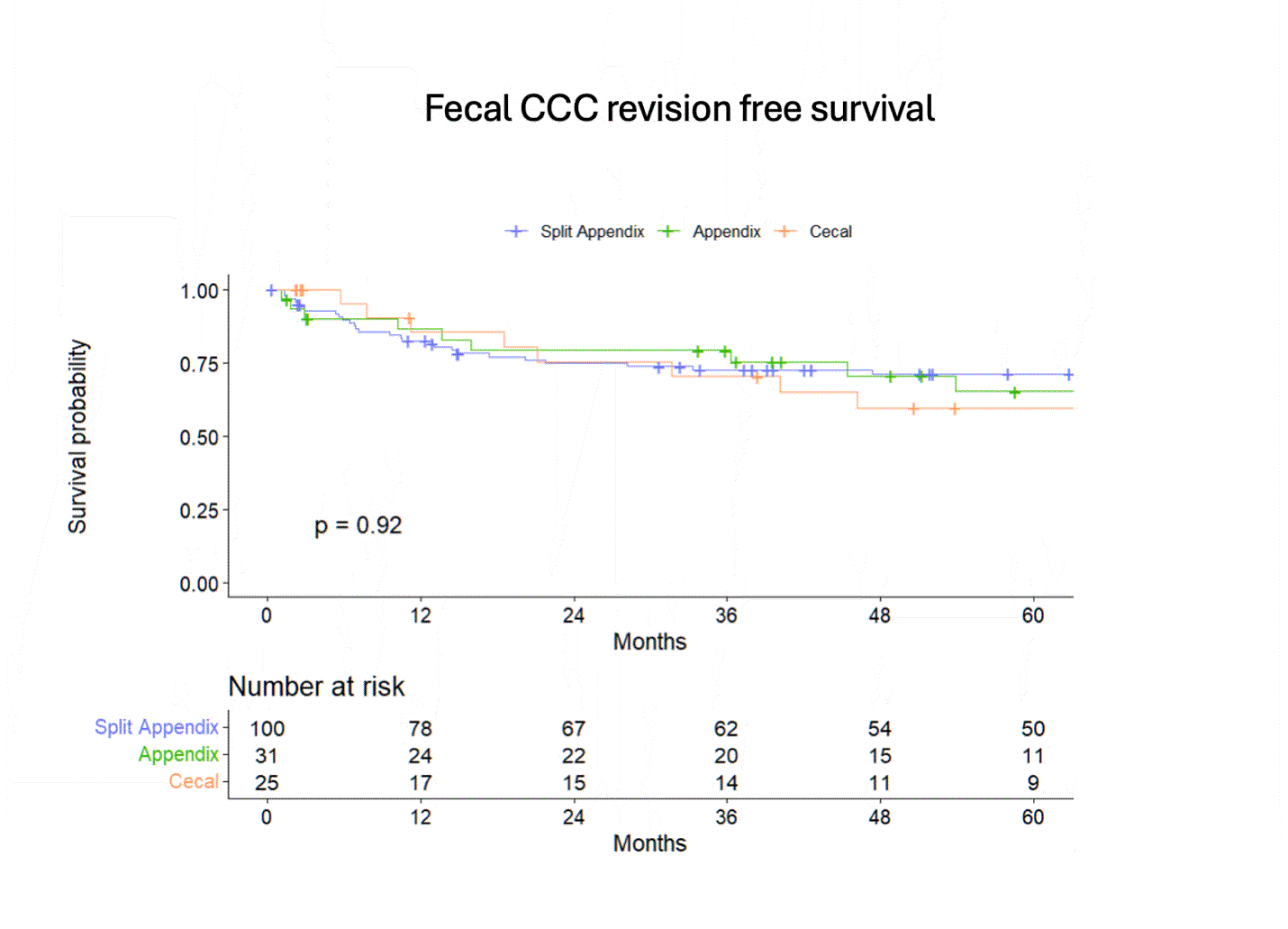
Results:A total of 156 patients underwent the simultaneous creation of CCCs with a median follow-up of 90 months (IQR 42-128). For urinary CCC, 100 patients (64.1%) underwent an appendicovesicostomy (APV) using a split-appendix technique, 16 patients (10.3%) underwent an AVP using an intact appendix, and 40 patients (25.6%) underwent a Monti. A Monti had a higher rate of subfascial revision (20.0%) when compared to an intact appendix (0%) and a split-appendix technique (1%) (p=0.002 ). Our prior published subfascial revision rate for Monti channels was 18.5%. There was no difference in the rates of endoscopic intervention (p=0.38) or suprafascial revision (p=0.10). There was no difference in the revision-free survival by channel type (p=0.38) (Figure 1). For administration of MACE, 100 patients (64.1%) underwent an appendicocecostomy using a split-appendix technique, 31 patients (19.9%) underwent an appendicocecostomy using an intact appendix, and 25 patients (16.0%) underwent a cecal flap. There was no difference in the rates of endoscopic intervention (p=0.46), suprafascial revision (p=0.73), or subfascial revision (p=0.40). There was also no difference in the revision-free survival by channel type (p=0.92) (Figure 2). The median length of stay (LOS) after the index surgery was 8 days (IQR
7-11) for a split-appendix technique, 12 days (IQR 8-13) for a Monti, and 13 days (IQR 11-13) for an intact appendix (p=0.003).
Conclusions:A split-appendix technique can be used for a majority of patients undergoing the simultaneous creation of CCCs. The decision to split the appendix needs to be balanced between the risk of channel-related complications for both CIC and administration of MACE. When feasible, a split-appendix technique has a shorter LOS than and a similar risk of surgical revision to an intact appendix and Monti or cecal flap.
Figure 1.
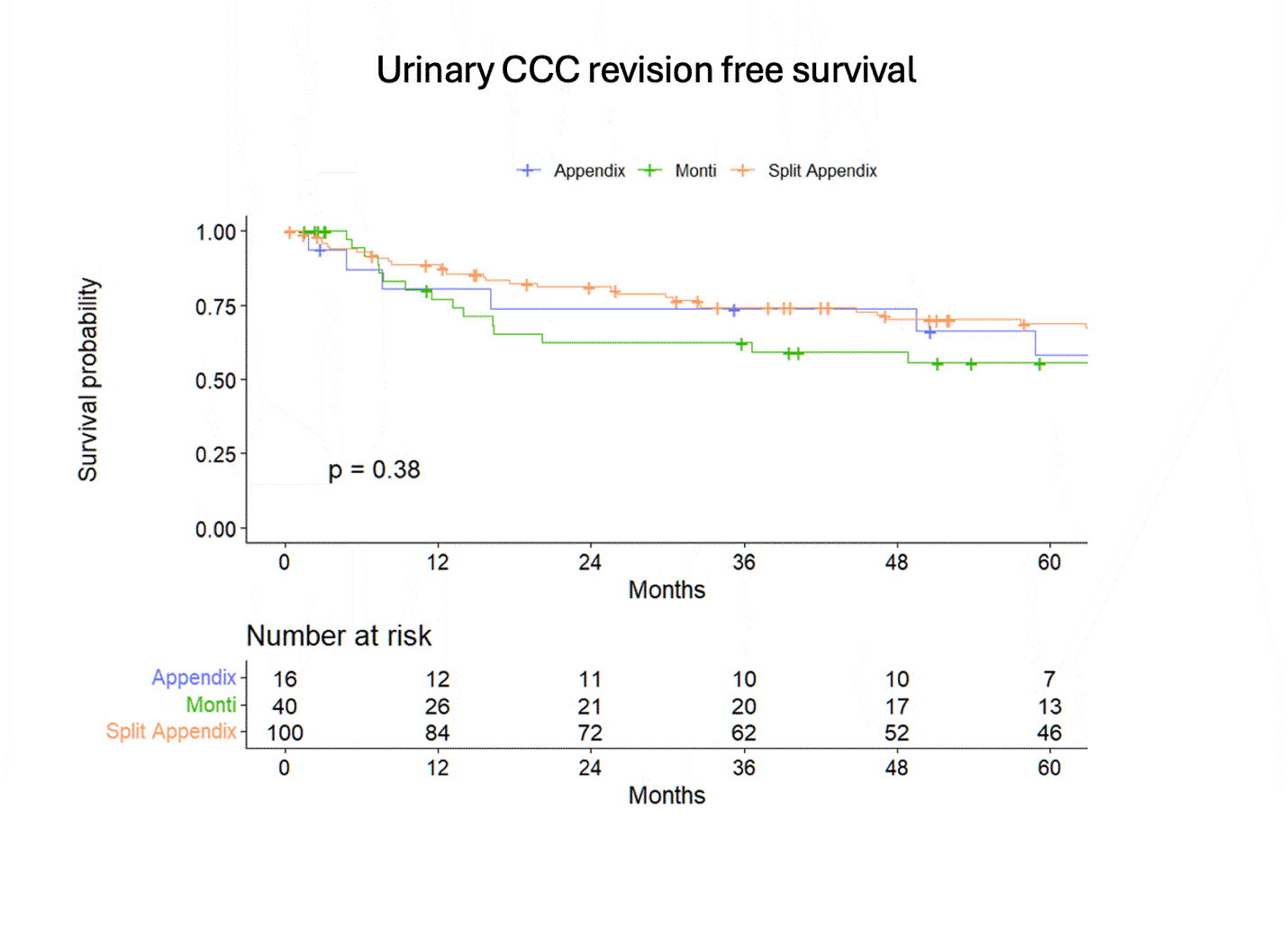
Figure 2.
Back to 2026 Abstracts


