Back to 2026 Abstracts
Lived Experiences of Adolescents and Young Adults with Spina Bifida and Associated Spinal Anomalies Following Reconstructive Urinary Continence Surgery: A Mixed-Methods Study
Tatjana Heisinger-Heidler, M.D., Ilina Rosoklija, MPH, Josephine Hirsch, BA, Jaclyn L. Papadakis, PhD, Emilie K. Johnson, MD., MPH, Elizabeth B. Yerkes, M.D..
Lurie Children's Hospital, Chicago, Chicago, IL, USA.
Background:Urinary continence is an important goal for adolescents and young adults (AYA) with spina bifida (SB) and associated spinal anomalies due to its impact on independence, social participation, and quality of life. While many individuals with neurogenic bladder choose to undergo reconstructive urinary continence surgery, existing literature focuses on quantitative outcomes such as health-related quality of life and decisional regret following surgery. This study aimed to explore the lived experiences of AYA with spina bifida and associated spinal anomalies regarding the impact of reconstructive urinary continence surgery on daily life.
Methods: This mixed-methods study used a convergent design and included semi-structured Zoom interviews with AYA aged 12-25 years with SB and associated spinal anomalies who underwent reconstructive urinary continence surgery. Participants were recruited using convenience sampling from a multidisciplinary spina bifida clinic at a tertiary pediatric center. Interviews were conducted between October 2025 and April 2026 and explored experiences with urinary incontinence, reconstructive surgery, and daily bladder management before and after surgery. Interviews were audio-recorded, transcribed verbatim, and coded using both inductive and deductive coding to identify themes. An online survey assessing current bladder management and demographics was also administered and survey data were summarized descriptively.
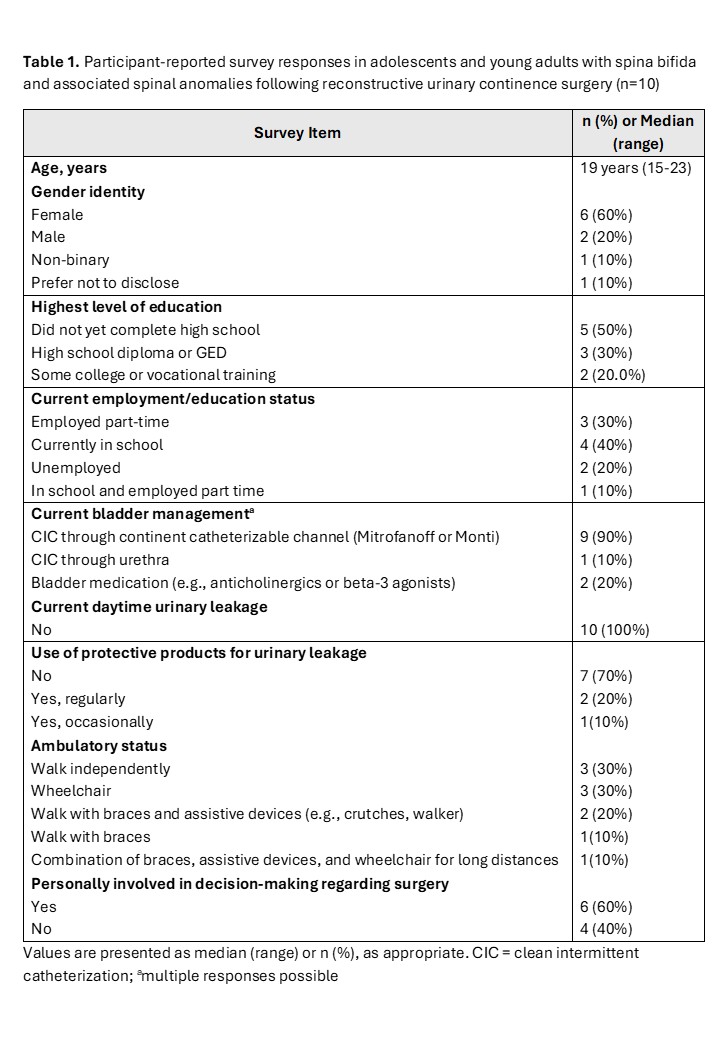
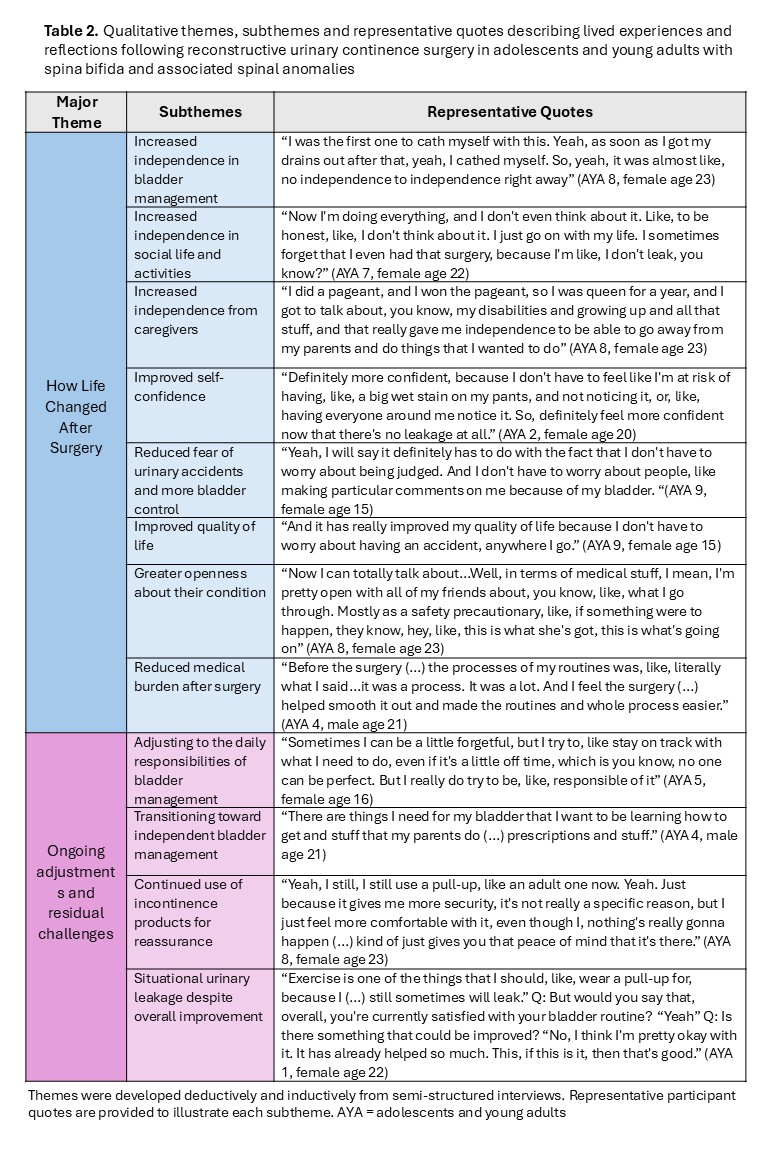
Results: Of 21 individuals approached, 10 AYA participated (60% female; median age 19 years [range 15-23]). Most participants had myelomeningocele (80%) and underwent surgery at a median age of 9 years (range 5-15). All participants reported daytime urinary continence after reconstructive surgery (Table 1). Qualitative analysis identified two overarching themes reflecting participants’ perceived changes in daily life following surgery and persistent challenges and adjustments in bladder management (Table 2). Participants described improvements in independence, particularly in bladder management, social participation and autonomy from caregivers. These changes were closely linked to increased self-confidence, reduced fear of urinary accidents and improved quality of life. AYA also reported decreased medical burden and greater openness regarding their condition. Despite experiencing many benefits following urinary reconstruction, participants described ongoing adjustments and residual challenges. These included daily bladder management responsibilities, a gradual transition toward independent management of bladder-related care tasks and the occasional use of incontinence products for reassurance despite achieving daytime urinary continence, as reflected in survey responses (Table 1). Situational leakage episodes persisted but were generally perceived as manageable and did not outweigh the overall improvements experienced by the participants following surgery.
Conclusion: AYA with SB and associated spinal anomalies described reconstructive urinary continence surgery as improving independence, self-confidence, social participation and quality of life. Although ongoing bladder management responsibilities and situational urinary leakage persisted, these challenges were generally considered acceptable in light of the overall perceived benefits of surgery. These findings may inform preoperative counseling by providing realistic expectations of benefits and ongoing postoperative bladder management needs.
Back to 2026 Abstracts


