Back to 2026 Abstracts
Intravesical OnabotulinumtoxinA and Risk of Bladder Augmentation/Incontinent Diversion in Children With Neurogenic Bladder From Myelomeningocele
Jin Kyu (Justin) Kim, MD, MS, Joshua Roth, MD, PhD, Henry Gold, MD, Konrad Szymanski, MD, MPH, Mark Cain, MD, Martin Kaefer, MD, Richard Rink, MD, Rosalia Misseri, MD.
Riley Hospital for Children, Indianapolis, IN, USA.
BACKGROUND: Children with spina bifida are at high risk for progressive neurogenic bladder dysfunction, which may necessitate bladder augmentation or incontinent urinary diversion. Intravesical onabotulinumtoxinA (Botox) is widely used to manage refractory neurogenic bladder; however, its impact on long-term disease progression remains unclear. We evaluated whether clinical or urodynamic response to Botox is associated with reduced progression to definitive surgical intervention in children with myelomeningocele (MMC).
METHODS: We performed a retrospective cohort study of children with MMC treated with intravesical Botox at a tertiary pediatric center. Demographics, urodynamics, bladder morphology, vesicoureteral reflux (VUR), and treatment characteristics were collected. “Botox effect” was defined as clinical or urodynamic improvement after initial injection. The primary outcome was progression to augmentation or incontinent diversion. Time-to-event analyses used Kaplan-Meier and Cox regression.
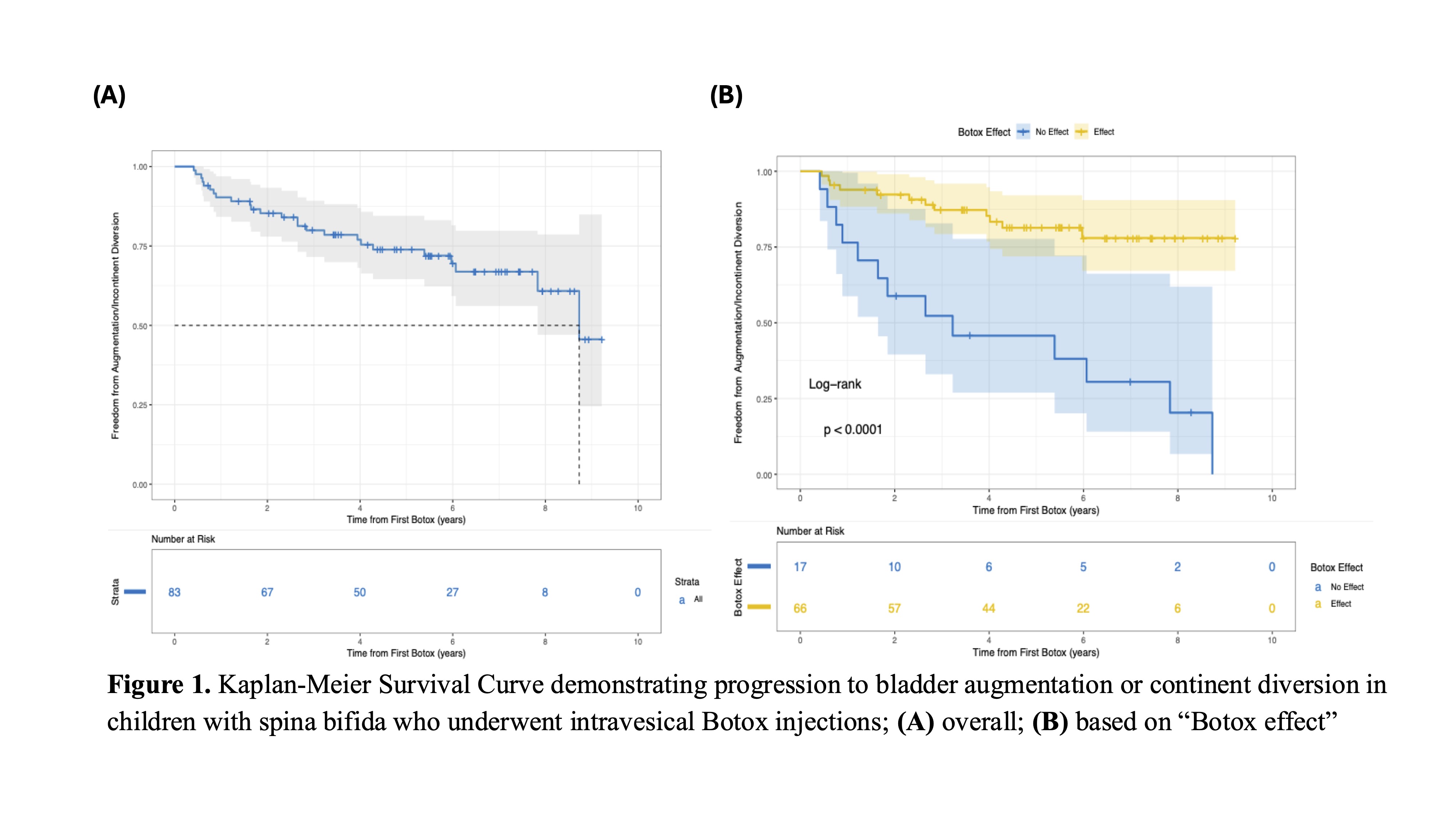
RESULTS: Eighty-three patients were included (median follow-up 4.8 years). Twenty-five patients (30.1%) progressed to augmentation or diversion. Five-year freedom from progression was 73.9% (
Figure 1A). Patients demonstrating a Botox effect had lower progression to augmentation or diversion compared with non-responders (5-year freedom from progression: 81.4% vs 45.8%, p<0.001;
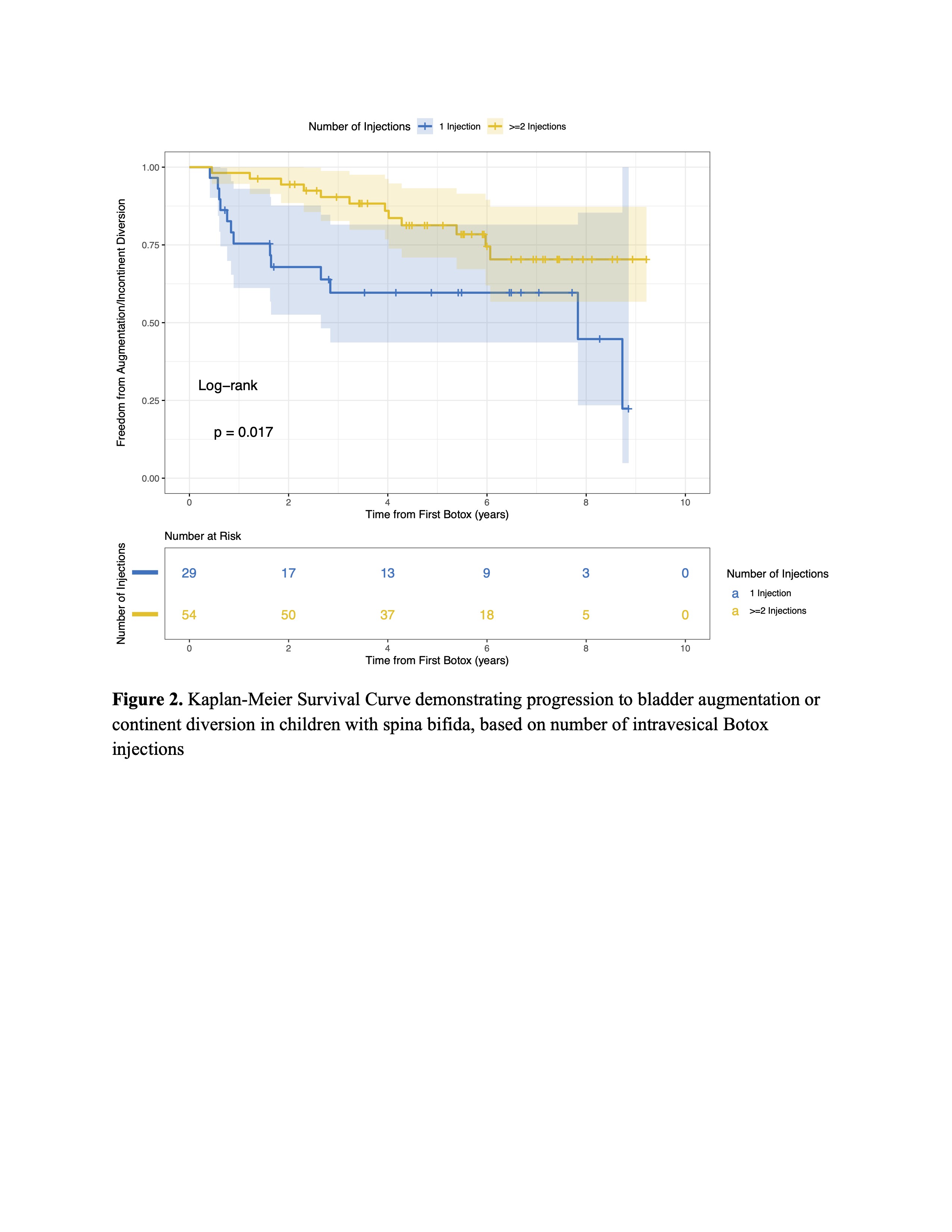
Figure 1B). On multivariable analysis, Botox effect was independently protective against progression (HR 0.23, 95% CI 0.09-0.60), while presence of VUR was associated with increased risk (HR 4.69, 95% CI 1.79-12.29). Receipt of multiple Botox injections was also associated with improved outcomes (
Figure 2).
CONCLUSIONS:In children with MMC, favorable initial response to Botox is strongly associated with reduced progression to augmentation or diversion. Future prospective studies with standardized definitions of response and long-term follow-up are needed to better define which patients derive durable benefit from Botox and to refine treatment strategies.
Back to 2026 Abstracts


