Back to 2026 Abstracts
Characterization of Gynecologic Anatomy, Surgical Interventions, and Outcomes in Female Patients with Cloacal Exstrophy
William Law, MD, Ted Lee, MD, MSc, Noa Ferziger, BA, Prathima Nandivada, MD, Francis Grimstad, MD, MS, Evalynn Vasquez, MD, MBA, Marc R. Laufer, MD, Richard Lee, MD, Belinda Dickie, MD, PhD.
Boston Children's Hospital, Boston, MA, USA.
BACKGROUND:Female patients with omphalocele-exstrophy-imperforate anus-spinal anomalies complex (OEIS), also known as cloacal exstrophy, frequently have gynecologic anatomy that results in Müllerian outflow tract obstruction. We present a cohort of female patients with OEIS to characterize initial anatomy, surgical interventions, and long-term gynecologic outcomes.
METHODS:A retrospective review was conducted of all female patients with OEIS at a single institution between 1988 and 2026 for gynecologic anatomy, surgical history, and long-term outcomes.
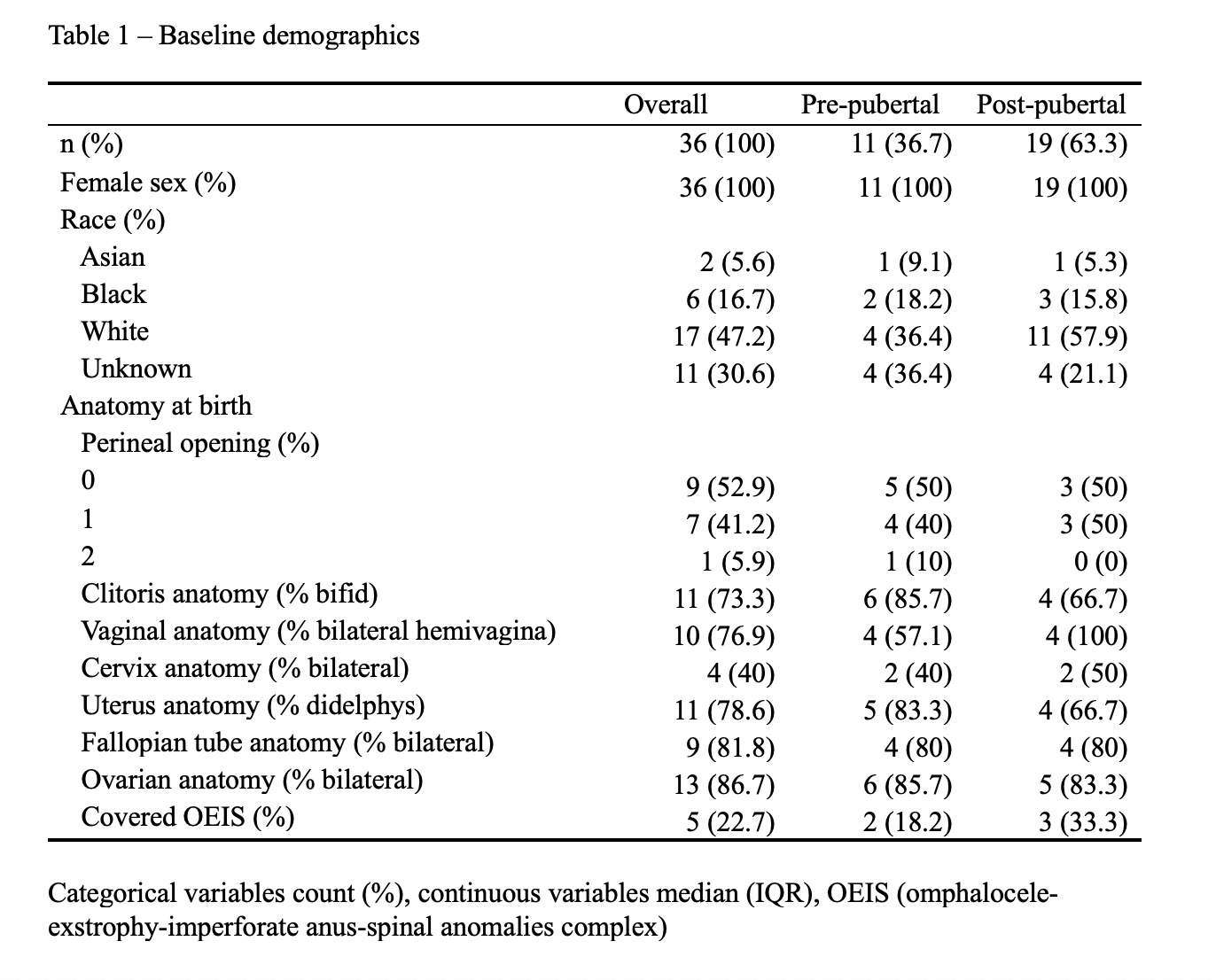
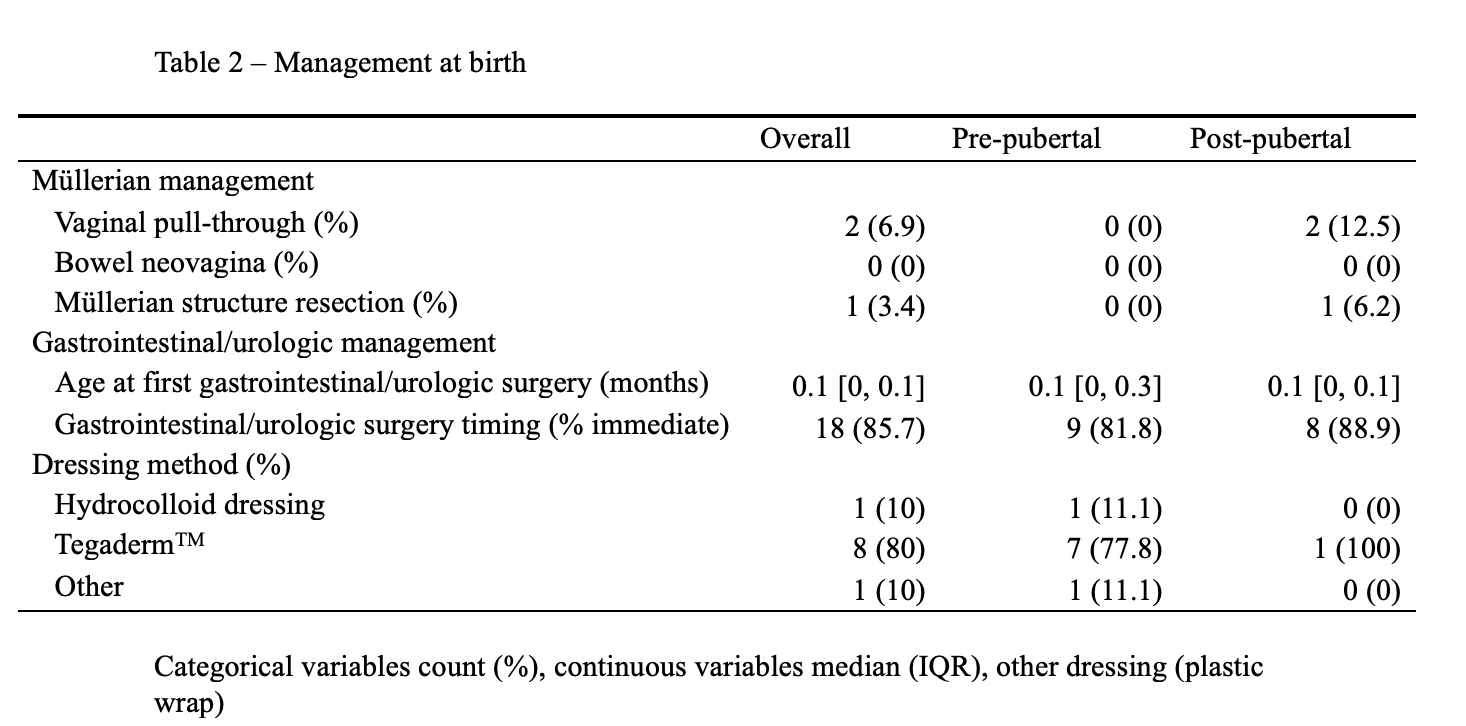
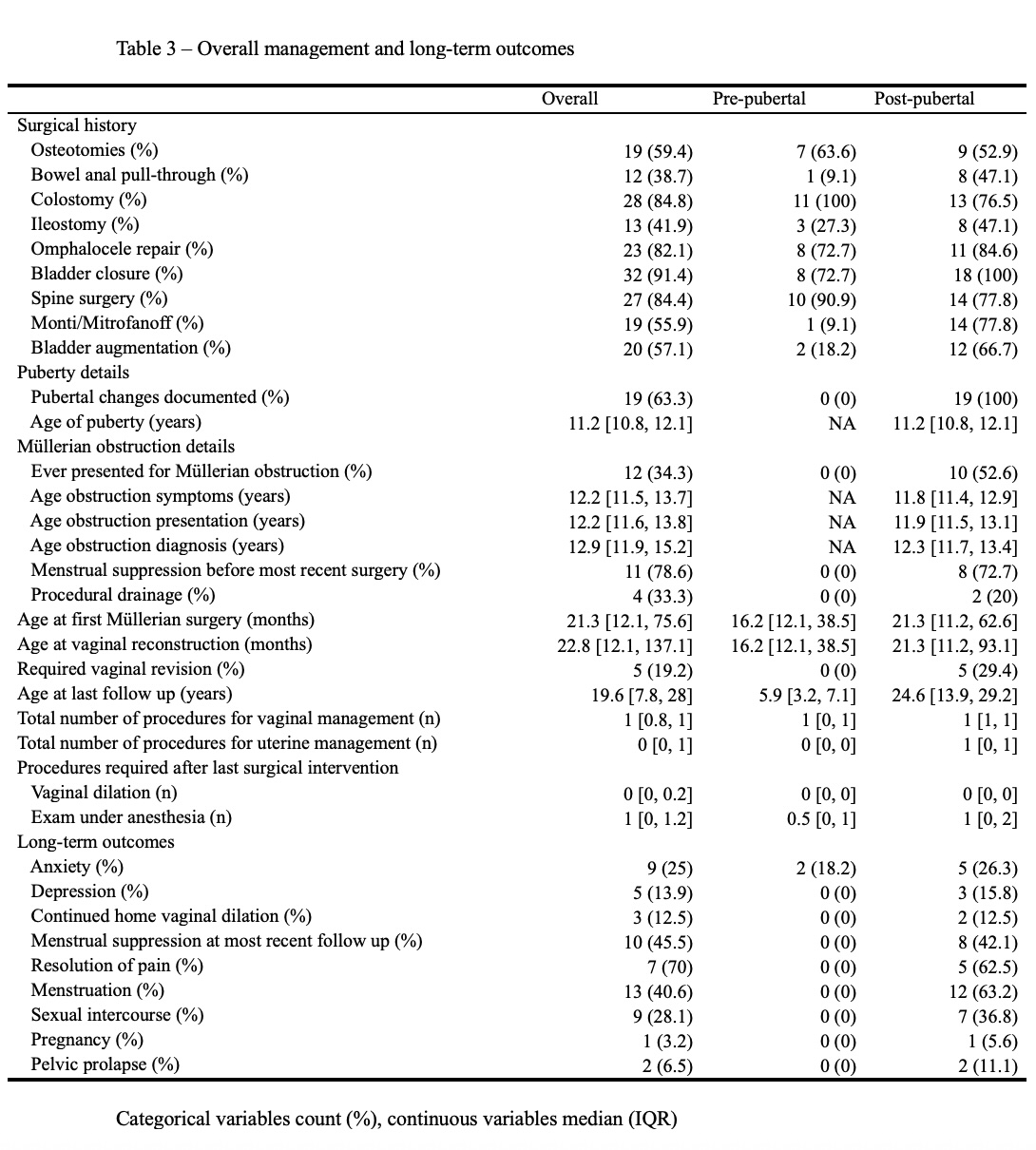
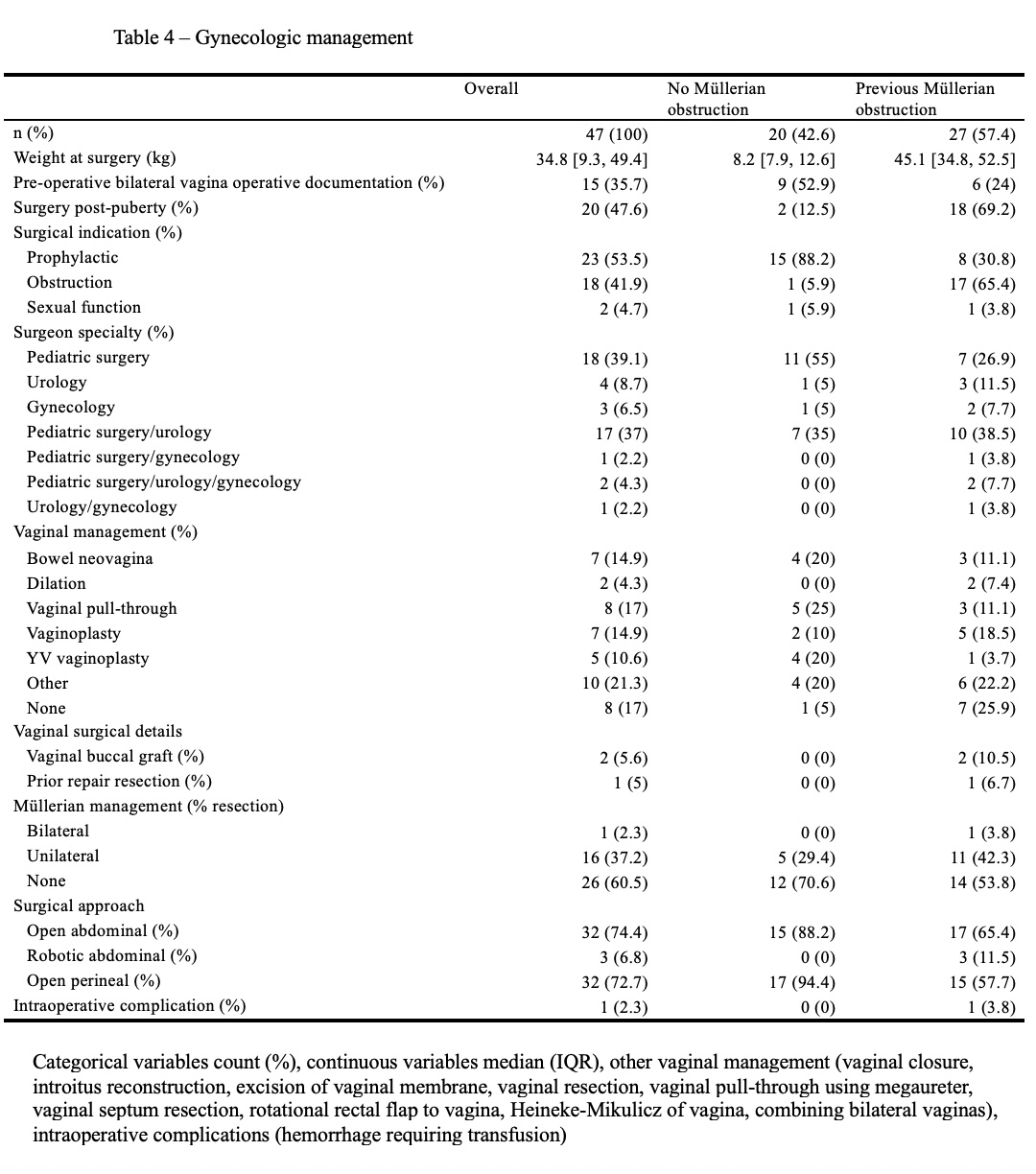
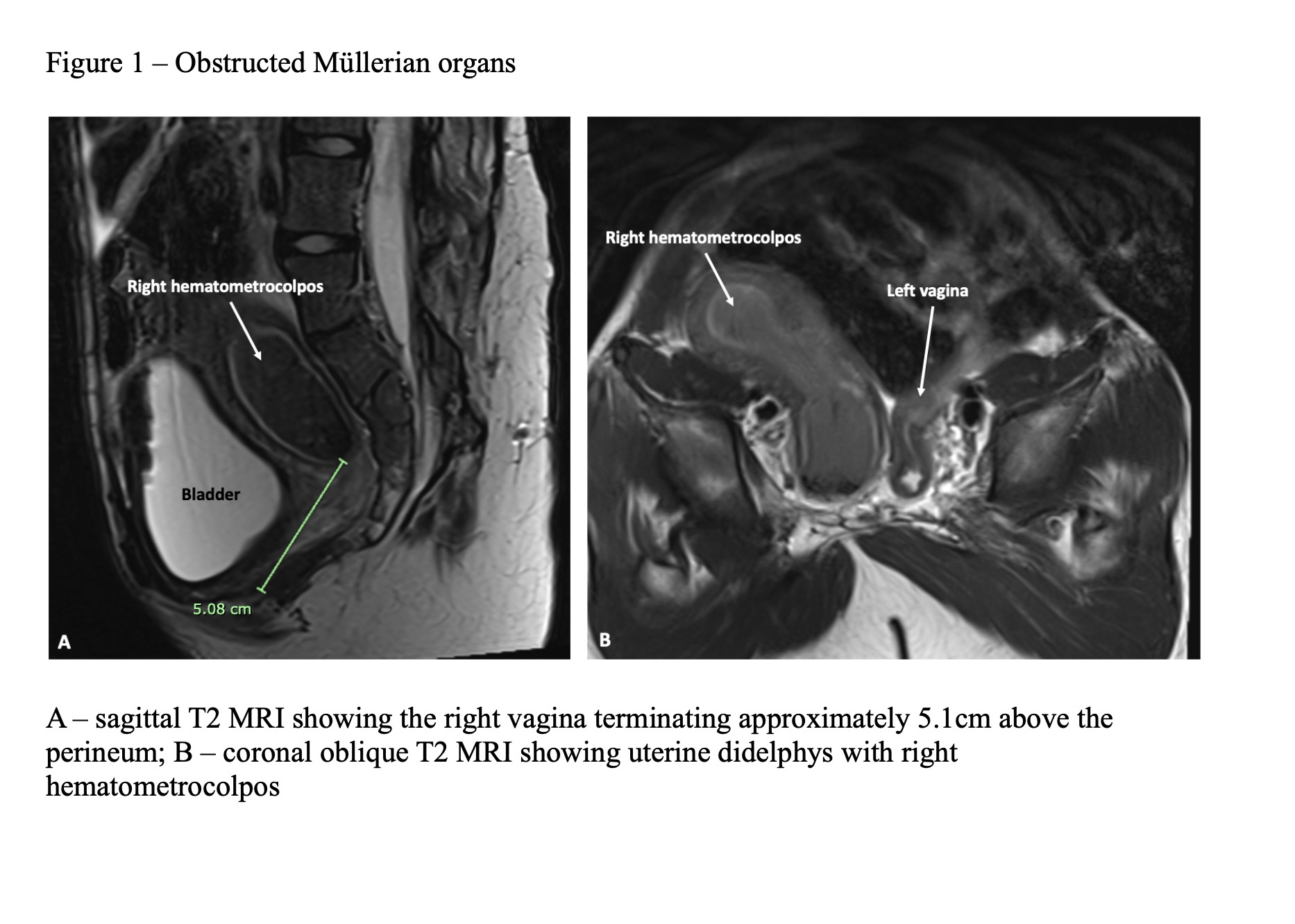
RESULTS:The cohort included 36 patients. Eleven (36.7%) were prepubertal and 19 (63.3%) were post-pubertal at the time of data collection (Table 1). 22 patients (61.1%) had at least partially documented gynecologic anatomy at birth; eleven (73.3%) had a bifid clitoris, 10 (76.9%) bilateral hemivagina, 4 (40%) bilateral cervices, 11 (78.6%) uterine didelphys, 9 (81.8%) bilateral fallopian tubes, and 13 (86.7%) bilateral ovaries (Tables 1-2). Among the 19 individuals who were followed after puberty, 10 (52.6%) had pain from Müllerian outflow tract obstruction, at a median age of 11.8 years [11.4, 12.9], with 5 (55.6%) having resolution of their pain after surgery (Figure 1, Table 3). Long-term outcomes in the post-pubertal group included 12 (63.2%) able to menstruate, 7 (36.8%) reporting sexual intercourse, and 1 (5.6%) pregnancy. Gynecologic surgical burden in this cohort was high, with 47 procedures in 27 of 36 patients (Table 4).
CONCLUSIONS:We report one of the largest cohorts of female OEIS individuals focusing on the characterization of gynecologic management and outcomes. The majority of female patients with OEIS have duplicated Müllerian anatomy and many present with Müllerian obstruction at puberty. We recommend characterizing reproductive anatomy whenever possible, avoiding early Müllerian structure resection or vaginal pull-through, and careful monitoring at puberty for Müllerian outflow tract obstruction.
Back to 2026 Abstracts


