Back to 2026 Abstracts
Cup Check: Decisional Conflict Among Youth Athletes Regarding Athletic Cup Usage
Nicholas N. Brutus, MD, Leah Ragno, BS, Xiangyi Xi, PhD, Jamille Rancour, PA-C, Therese Collett-Gardere, APRN, Eric Bortnick, MD.
Yale New Haven Hospital, New Haven, CT, USA.
BACKGROUND: Injury to the scrotum and scrotal contents during athletics is a known risk for male athletes. Although blunt testicular injury requiring surgical management is rare (<1% of all trauma cases), it is a preventable risk associated with contact sports. With the high prevalence of sport participation among school-age biological males, major and minor groin injuries are commonly seen. Athletic cups, while recommended, are not commonly used by adolescents. Reasons for not wearing an athletic cup could be multifactorial. We sought to evaluate the decision-making process by adolescent male athletes using a validated decisional conflict scale and to correlate to factors that might affect their decision to wear or not wear a cup.
METHODS: From June 2025 to October 2025, we surveyed biological male patients aged 9-17 who presented to the pediatric urology clinic and reported participating in a contact sport. The survey assessed demographic information and other potential factors that informed decision making on athletic cup usage. A validated Decisional Conflict Scale (DCS) was used to objectively assess participant conflict in wearing an athletic cup during contact sports.
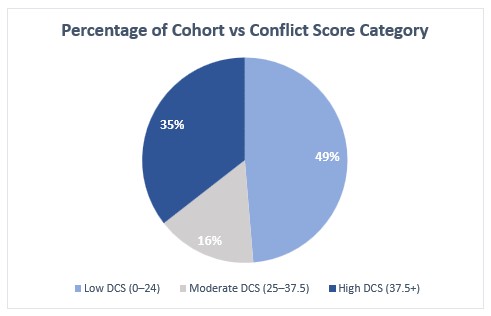
RESULTS: N=78. 64% of respondents reported ‘almost never or never’ wearing an athletic cup when playing contact sports. 45% of respondents witnessed a groin injury and 21% reported a personal groin injury while playing sports. Participants were significantly less likely to report “never or almost never” to wearing a cup if they participated in football (32% vs 68%, p = 0.046), lacrosse (3% vs 94%, p = 0.018), or hockey (1% vs 98%, p <0.001). Participants were significantly more likely to report “always or almost always” wearing a cup if a cup was recommended by their coach (60% vs 40%, p <0.001). 49% of participants reported little to no decisional conflict in choosing to wear a cup, while 51% had clinically significant decisional conflict (≥ 25 on DCS). Limitations in mobility was a significant factor for high DCS score for reasons not to wear an athletic cup (p = 0.022). A history of personal scrotal injury or witnessed scrotal injury was not significantly associated with a difference in DCS score compared to those who did not.
CONCLUSIONS: 45% of pediatric athletes have witnessed scrotal trauma when playing contact sports, yet 64% report not wearing a cup during athletic play. Over 1/3 of athletes have high decisional conflict on wearing a cup during athletic play. Our research suggests that coaches play an important role in communicating the necessity in scrotal safety through the recommendation of athletic cups.
Back to 2026 Abstracts


