Back to 2026 Abstracts
Insurance and Health Literacy, Not Geographic Factors, Drive Transition Readiness in a Wisconsin Transitional Urology Cohort
Rennen Haramaty, MD, Jennika Finup, NP, Leeyan Nasrallah, Student, Irene Choi, Student, Madeleine Rapisarda, NP, Javier Santiago, MD, Kali Mesdjian, NP, Vinaya Bhatia, MD, Shannon Cannon, MD, Walid Farhat, MD, Kristin Ebert, MD.
University of Wisconsin–Madison, Madison, WI, USA.
IntroductionAdvances in pediatric care have improved survival for patients with spina bifida (SB), creating a growing population of adolescents and young adults requiring transition from pediatric to adult care. While geographic barriers are often assumed to impact access to care in rural settings, the relative contribution of individual-level factors, such as insurance status and health literacy, versus geographic factors remains unclear. This is particularly relevant in Wisconsin, a predominantly rural state, where access to a centralized multidisciplinary transition clinic may mitigate geographic disparities. The aim of this study was to evaluate the association between social determinants of health (SDOH) and transition readiness in this setting.
MethodsPatients aged ≥16 years with lifelong urological conditions were evaluated in a standardized transitional urology clinic. Intake assessments included the Transition Readiness Assessment Questionnaire (TRAQ) and Brief Health Literacy Screening (BHLS). A retrospective review was performed for patients seen between August 2024 and April 2026. Patients with completed surveys were included. Age, sex, diagnosis, and insurance type were recorded. Travel distance was calculated from home address; Area Deprivation Index (ADI) was categorized as low (1-49) or high (50-100). Statistical analysis was conducted in R using t-tests, correlation analysis, and multivariable linear regression, with significance set at p<0.05.
ResultsOf 66 patients seen, 59 were eligible. Median age was 21 (IQR 4), with 49% male (Table 1). The most common diagnoses were spina bifida (34%) and neurogenic bladder (34%). Median travel distance was 45.5 miles (range 1-229), and median ADI was 52.2 (range 1-99). Thirty-one (53%) patients resided in low-ADI areas; 25 (42%) had public insurance. Median TRAQ score was 93 (range 0–100). Patients with private insurance had higher TRAQ scores (p=0.03). TRAQ did not differ by ADI (p=0.9), travel distance (p=0.18), or rurality (p=0.9). Among 28 patients with both TRAQ and BHLS data, median BHLS score was 14 (range 4–20), indicating marginal health literacy. Health literacy demonstrated a modest positive
correlation with TRAQ scores (p=0.01) and remained significant after adjustment for age and diagnosis (p=0.02) (Figure 1).
ConclusionsIn this Wisconsin cohort, transition readiness was associated with insurance type and health literacy, while geographic measures were not significant. Patients with public insurance and lower health literacy demonstrated reduced readiness, identifying key targets for intervention. These findings likely reflect the mitigating effect of a centralized multidisciplinary transition clinic and should be interpreted within this specific healthcare setting rather than generalized broadly. Future efforts should focus on health literacy–based education and care coordination to improve transition outcomes.
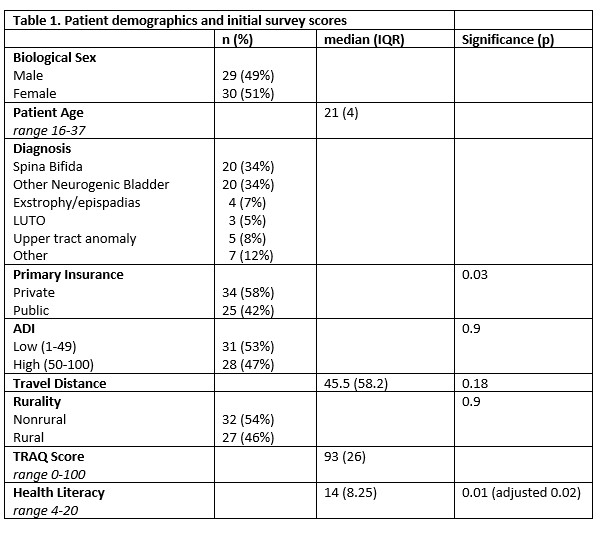
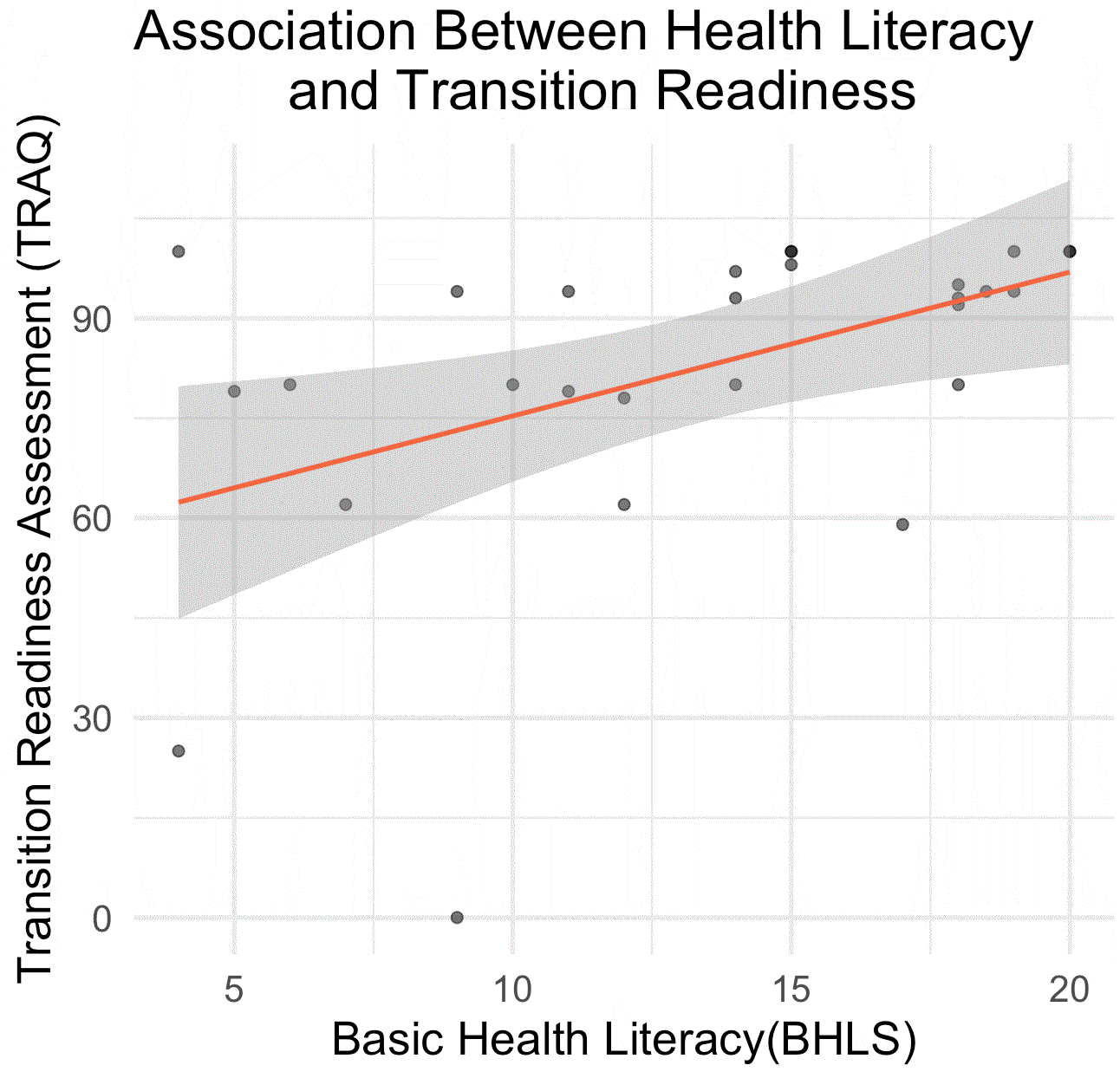 Figure 1. Association between health literacy and transition readiness.
Higher health literacy is associated with improved transition readiness, demonstrating a significant positive correlation.
Back to 2026 Abstracts


