Back to 2026 Abstracts
Kidney Transplant Outcomes in Prune Belly Syndrome: A Retrospective Analysis of UNOS Data
Matthew Price, BS, Pranav Sivarman, BS, Zachary Oatley, BS, Taeris Guzman, BS, Rupesh Raina, MD.
Northeast Ohio Medical University, Rootstown, OH, USA.
Kidney Transplant Outcomes in Prune Belly Syndrome: A Retrospective Analysis of UNOS DataIntroduction: Prune Belly Syndrome (PBS) is a rare congenital disorder characterized by deficient abdominal wall musculature, cryptorchidism, and genitourinary abnormalities, with an incidence of approximately 3.8 per 100,000 births. Approximately 30% of PBS patients develop end-stage renal disease (ESRD) requiring transplantation. Anatomical challenges unique to PBS, including bladder dysmotility and voiding dysfunction, raise concern for inferior post-transplant outcomes. However, evidence is limited to small single-center series. We present the largest propensity score-matched analysis of renal transplant outcomes in PBS patients to date.
Methods: We performed a retrospective case-control study using the United Network for Organ Sharing(UNOS) Standard Transplant Analysis and Research (STAR) database, including patients undergoing single kidney transplantation from January 1, 2010, to October 4, 2024. PBS patients(n=272) were matched 1:4 to controls (n=972) using propensity scores based on recipient age, sex, race, BMI, dialysis duration, donor type, donor age, HLA mismatch number, and kidney donor profile index (KDPI). Primary outcomes were death-censored graft survival and overall patient survival, analyzed using Kaplan-Meier curves and log-rank testing.
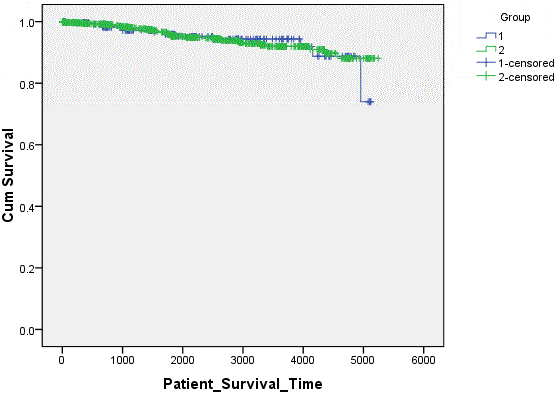
Results: A total of 1,244 patients were included. The cohort was predominantly male (97.3%) with a median age of 12 years (IQR 4-24) and median follow-up of 1,850 days. Baseline characteristics were well-matched with no significant differences between groups (all p>0.05). Graft failure occurred in 19.9% of PBS patients vs. 16.4% of controls (p=0.202). Median graft survival was 2,063 vs.1,724 days (p=0.495), mean graft survival was 3,983 days (95% CI 3,739-4,226) vs. 4,201 days(95% CI 4,069-4,332) for PBS and controls, respectively (log-rank p=0.216). Patient mortality was 4.8% vs. 4.6% (p=0.918). Mean patient survival was 4,823 days (95% CI 4,667-4,979) vs.4,942 days (95% CI 4,854-5,029) (log-rank p=0.903).
Conclusions: PBS patients demonstrated comparable graft and patient survival to propensity score-matched controls. These findings suggest PBS is not a contraindication to renal transplantation, and support counseling that outcomes are equivalent to non-PBS recipients.
Figure 1: Kaplan-Meier curve for graft survival time. Log-rank (Mantel-Cox) comparison of death-censored graft survival between PBS cases (Group 1) and matched controls (Group 2).p=0.216.
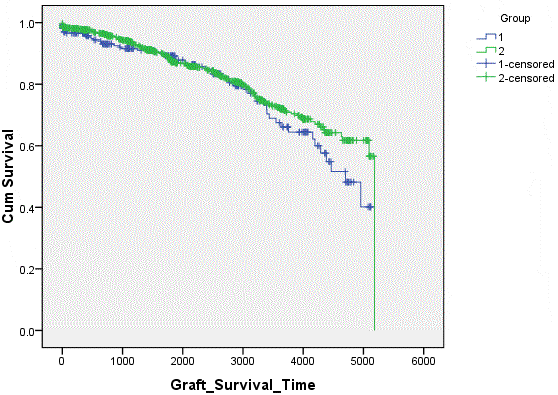 Figure 2:
 Kaplan-Meier curve for overall patient survival time. Log-rank (Mantel-Cox)comparison of patient survival between PBS cases (Group 1) and matched controls (Group 2).p=0.903.
Back to 2026 Abstracts


