Back to 2026 Abstracts
Pediatric Circumcision and Spinal Anesthesia: Fast, Effective, and Cheap
Adam Cole, MD1, Emma Harwood, MD1, Raeann M. Dalton, DO1, Madeleine Powers, BS2, Evelyn James, MPH1, David Chalmers, MD1, Lily C. Wang, MD,PhD1.
1Maine Medical Center, Portland, ME, USA, 2University of New England College of Osteopathic Medicine, Portland, ME, USA.
BACKGROUND: Spinal anesthesia (SA) is a safe and effective anesthetic technique in brief elective pediatric procedures, yet remains underutilized because of concerns regarding operative delays and increased costs compared with general anesthesia (GA). This study compares operating room times, recovery times, hospital costs, and perioperative medication utilization in pediatric circumcisions performed under SA versus GA.
METHODS: We retrospectively reviewed pediatric circumcision cases performed at our institution between 2018 and 2025 in patients eligible to receive either SA or GA, up to 12 months of age. Cases involving concurrent surgical procedures were excluded. Patients initially managed with SA who required conversion to GA were recorded and excluded from the final analysis. Operative and recovery times, hospital costs, and intraoperative medication utilization were compared between anesthesia groups using Mann-Whitney U tests. The relationship between operating room (OR) utilization and hospital surgical charges was assessed using Pearson correlation analysis.
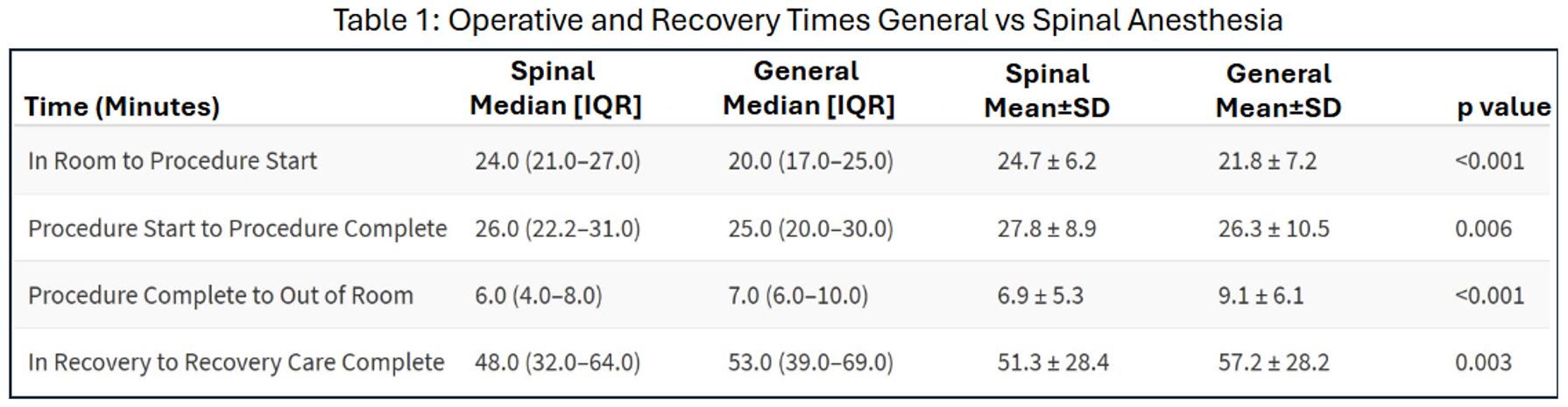
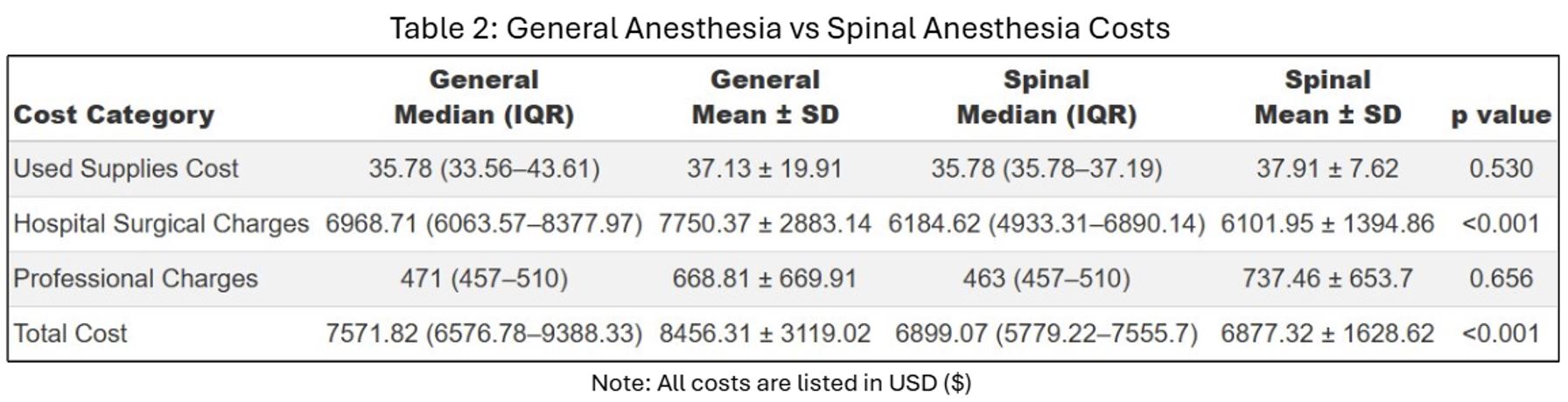
RESULTS: A total of 614 patients were included with 303 in the GA group and 311 in the SA group. Thirteen of 316 attempted SA cases (4.1%) required conversion to GA and were excluded. Total OR time did not differ significantly between groups (p = 0.48). Compared with GA, SA cases had slightly longer mean pre-procedure in-room ( +2.9 minutes, p < 0.001) and procedural times (+1.5 minutes, p = 0.006), which were offset by slightly shorter mean post-procedure in-room times (−2.2 minutes, p < 0.001). Mean recovery time to discharge was significantly shorter in the SA group (−5.9 minutes, p < 0.001, Table 1). Patients receiving SA required substantially less anesthetic, opioid, and nonsteroidal anti-inflammatory drug use than those receiving GA. Opioids were administered in 68% of GA cases compared with 4% of SA cases (p < 0.001). Total costs were 19% lower in the SA group (p < 0.001). This difference was largely driven by 20% lower hospital surgical charges in the SA group (p < 0.001) with no significant difference in supply costs and professional charges between groups (p = 0.53; p = 0.66, Table 2). Across the overall study population, OR time demonstrated only a weak correlation with hospital surgical charges (r = 0.291, p < 0.001).
CONCLUSIONS: SA was associated with faster postoperative recovery, comparable overall OR utilization, and markedly reduced opioid and overall medication use compared with GA. Although supply costs and professional charges were similar between groups, total costs and hospital surgical charges were significantly lower with SA. These findings support SA as a safe, efficient, and cost-effective alternative to GA for pediatric circumcision, offering quicker recovery and minimizing perioperative opioid exposure without increasing costs or causing OR delays.
Back to 2026 Abstracts


