Back to 2026 Abstracts
Computational Fluid Dynamics-Based Optimization of Endoscopic Injection Therapy in Pediatric Vesicoureteral Reflux: An In-Silico Explanation of Technique-Dependent Outcomes
Jin Kyu Kim, MD, MS, Joshua Roth, MD, PhD, Benjamin Whittam, MD, MS, Nikhil Batra, MD, Michael Chua, MD, MASc, DSc, Rosalia Misseri, MD.
The Riley Hospital for Children, Indianapolis, IN, USA.
BACKGROUND:Endoscopic bulking therapy is widely used to treat vesicoureteral reflux (VUR), yet technique selection remains largely empiric and outcomes vary by reflux grade and bladder dynamics. We developed a computational fluid dynamics (CFD) model to define the hydrodynamic mechanisms underlying technique-dependent success and failure.
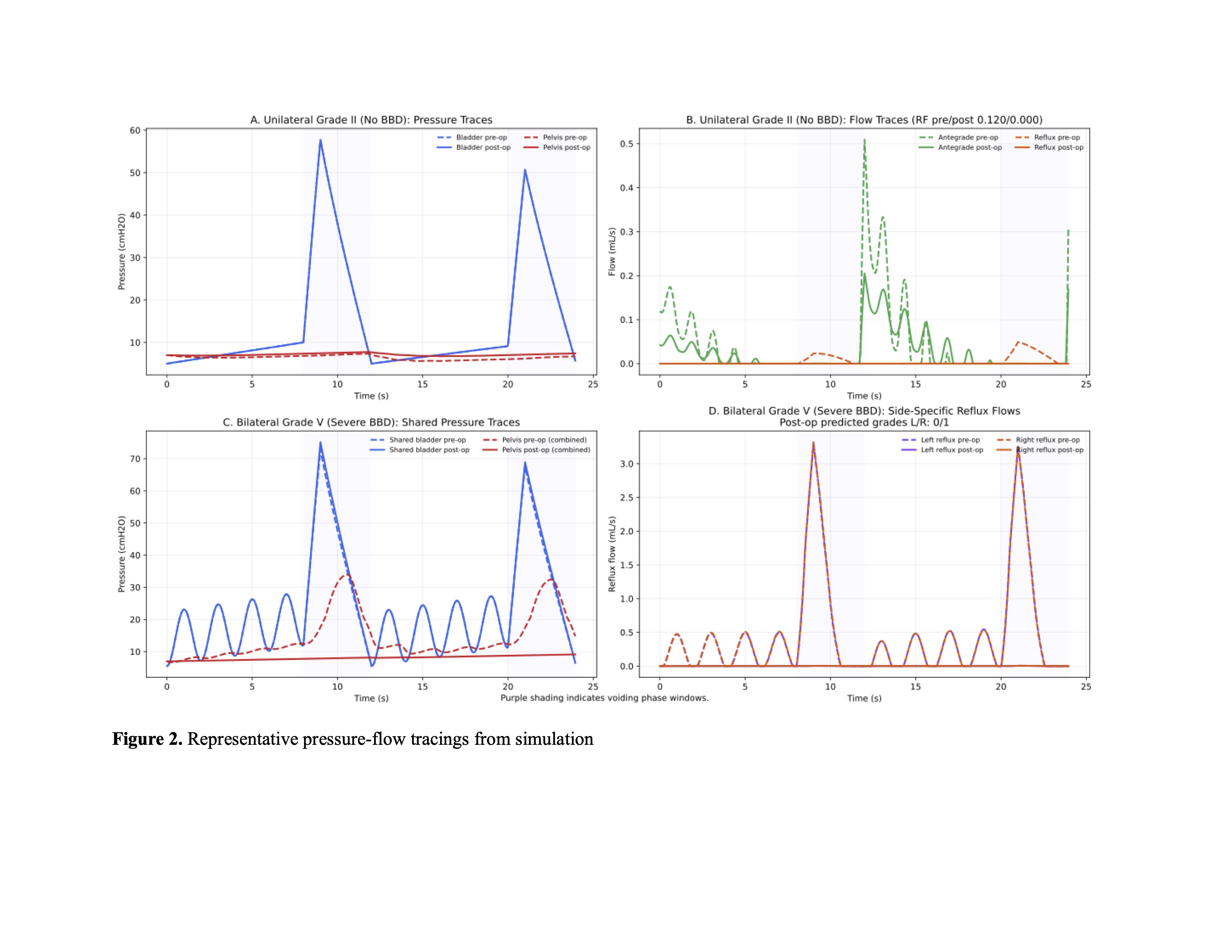
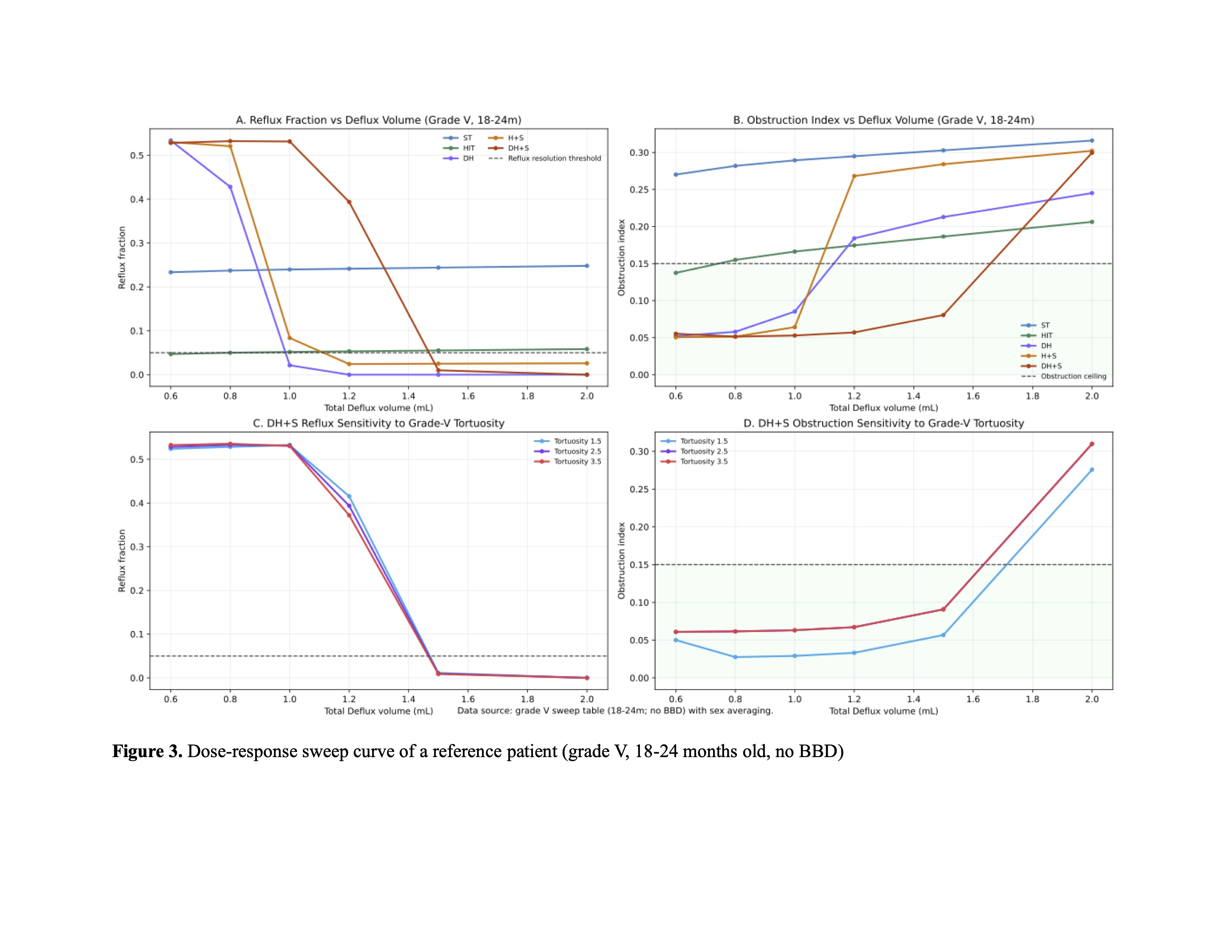
METHODS:A pressure-driven CFD framework was constructed to simulate bilateral ureters sharing a dynamic bladder state across filling and voiding phases. The model incorporated age-dependent geometry, ureterovesical junction (UVJ) deformation, ureteral compliance, and volume-dependent mound formation using a sigmoid efficacy function. STING, HIT, Double HIT, and combination techniques were simulated under varying reflux grades and bladder pressure conditions, including patterns mimicking bladder and bowel dysfunction (BBD). Outcomes included reflux reduction, obstruction index, and pressure-flow trade-offs.
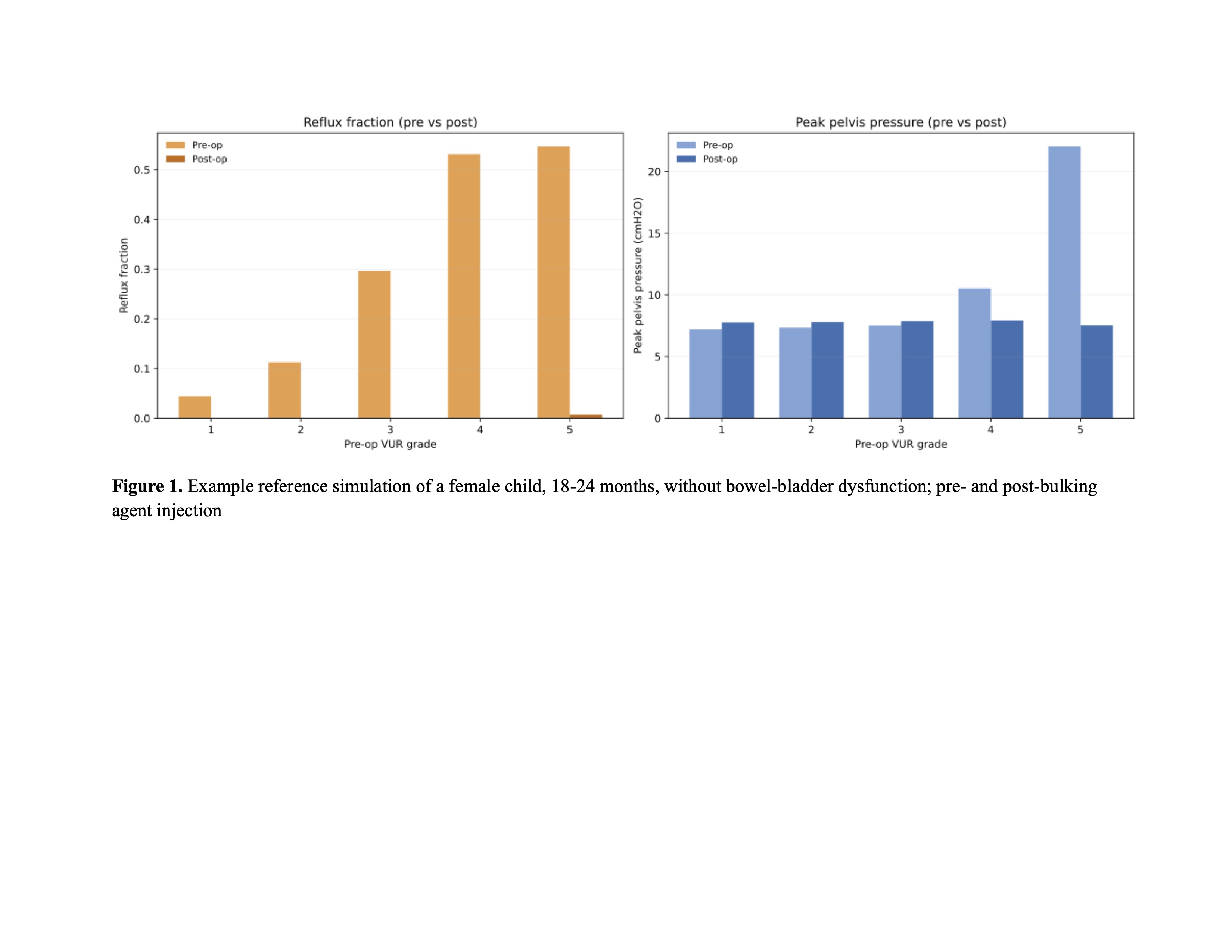
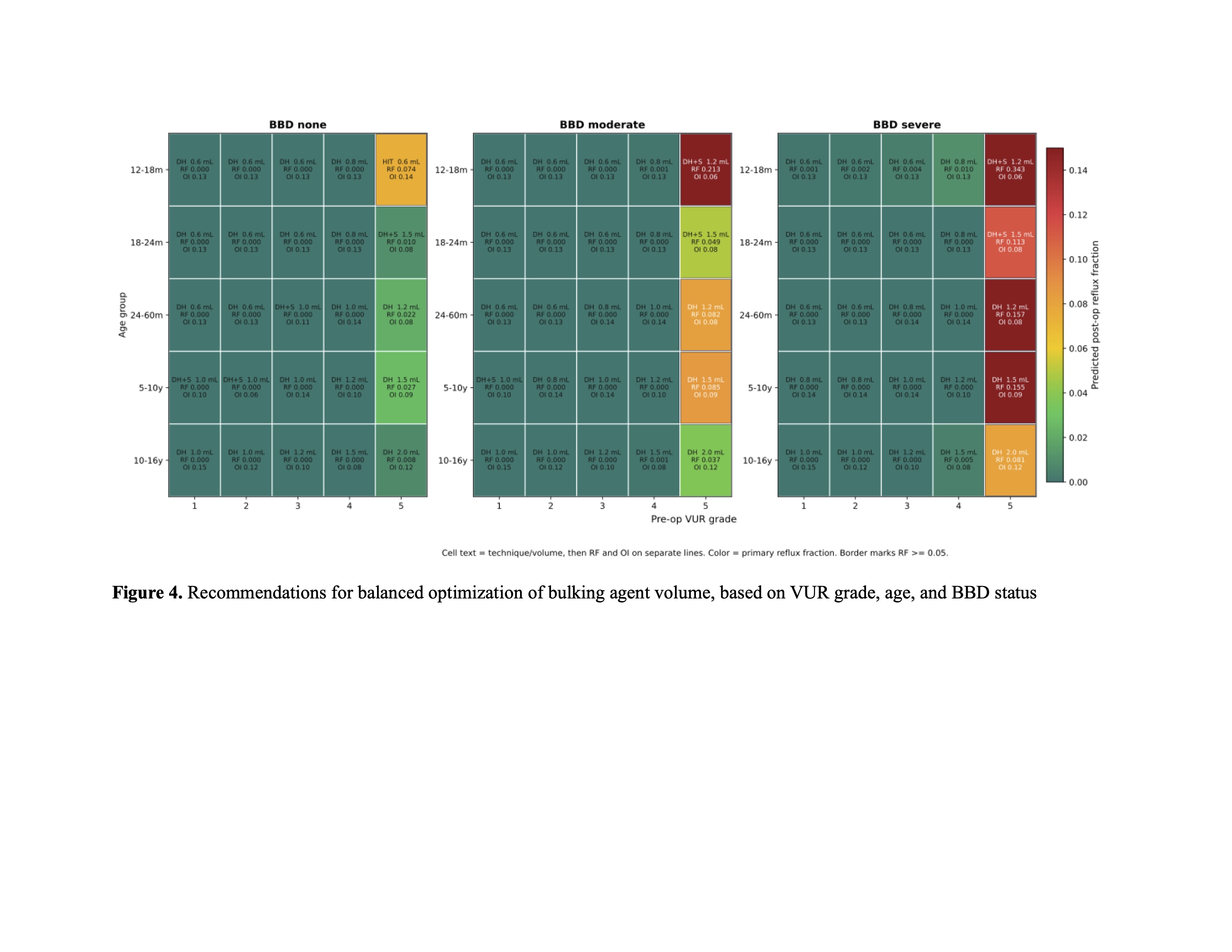
RESULTS:Retrograde flow was governed by pressure gradients and reverse resistance, which scaled with the fourth power of ureteral radius. Across grades I-IV simulations, Double HIT achieved a 15-25% greater reduction in reflux index compared with single-site HIT and a 30-40% greater reduction compared with STING at equivalent obstruction thresholds. When normalized to obstruction index, Double HIT produced approximately 20% greater reflux suppression per unit increase in resistance, reflecting more effective spatial redistribution of narrowing along the intramural ureter. In contrast, grade V templates demonstrated a baseline reverse resistance deficit exceeding 50% relative to lower-grade systems due to marked ureteral dilation; even maximal safe bulking volumes restored less than 60% of competence in older age geometries. Elevated voiding pressures simulating severe bladder dysfunction reduced overall technique efficacy by 10-18% and increased obstruction risk disproportionately in higher-volume and combination approaches. Bilateral simulations revealed that unilateral escalation of injection volume increased contralateral obstruction index by up to 12% under high-pressure voiding conditions, highlighting non-linear bladder-ureter coupling effects.
CONCLUSIONS:This CFD-informed model explains technique-dependent outcomes in VUR, demonstrating that Double HIT improves hydrodynamic stability rather than simply increasing injected volume, while severe dilation limits corrective capacity. The framework supports mechanism-guided, obstruction-constrained technique selection.
Back to 2026 Abstracts


