Back to 2026 Abstracts
The Future of Pediatric Kidney Care: Workforce Projections in Pediatric Urology and Nephrology
Savannah S. Petrus, MD1, Ethan Wan, BS1, Kenneth W. Gow, MD2, Michael Ernst, MD3, David B. Joseph, MD1, Ching Man Carmen Tong, DO1.
1University of Alabama at Birmingham, Birmingham, AL, USA, 2Stony Brook Children's Hospital, Stony Brook, NY, USA, 3Stony Brook University Hospital, Stony Brook, NY, USA.
BACKGROUND: Pediatric urology and nephrology work collaboratively to treat congenital renal pathologies. Within both fields, there are concerns for declining trainee interest. These trends raise concern for workforce shortages, and with both specialties being concentrated in urban academic centers, this could exacerbate geographic disparities in healthcare access. Understanding current workforce projections is crucial in addressing recruitment, retention, and equitable distribution of care.
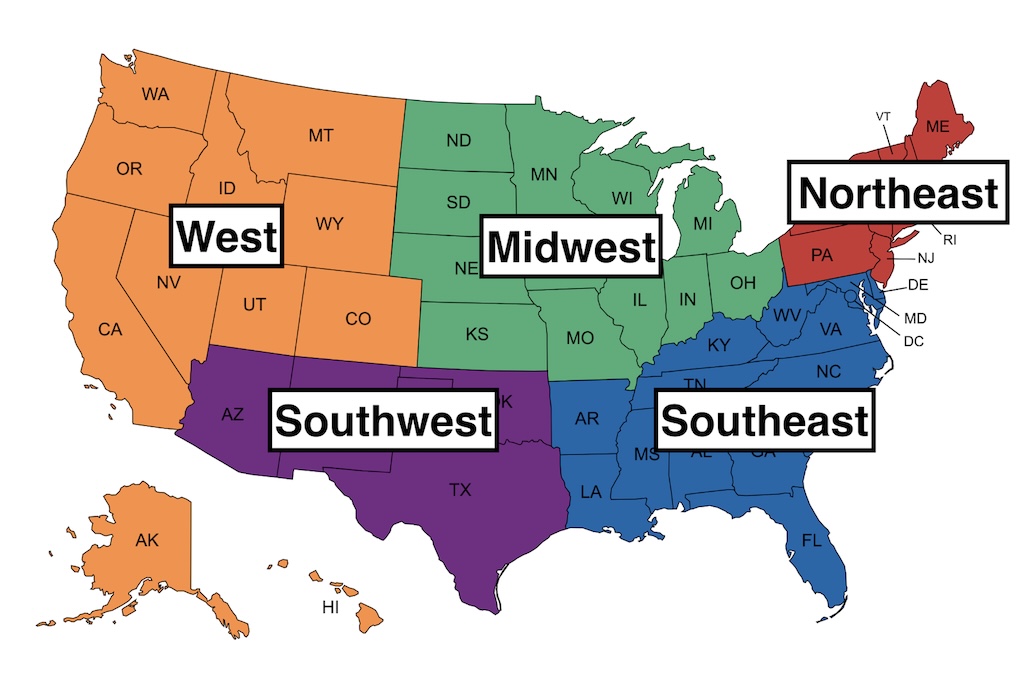
METHODS: The publicly available American Board of Medical Specialties (ABMS) Data Viewer was used to evaluate workforce trajectories by geographic region (Northeast, Southeast, Midwest, Southwest, West). Within each region, three scenarios were examined: maintaining current training output, 10% growth per year, and 10% decline per year. Retirement was modeled probabilistically where each physician faced an independently drawn probability of retirement that increased with age. Incoming proportions of physicians within each region were kept stable and adjusted for increases or decreases in the overall workforce. The UVA Weldon Cooper Center's census projection data was used to estimate each region's pediatric population over time.
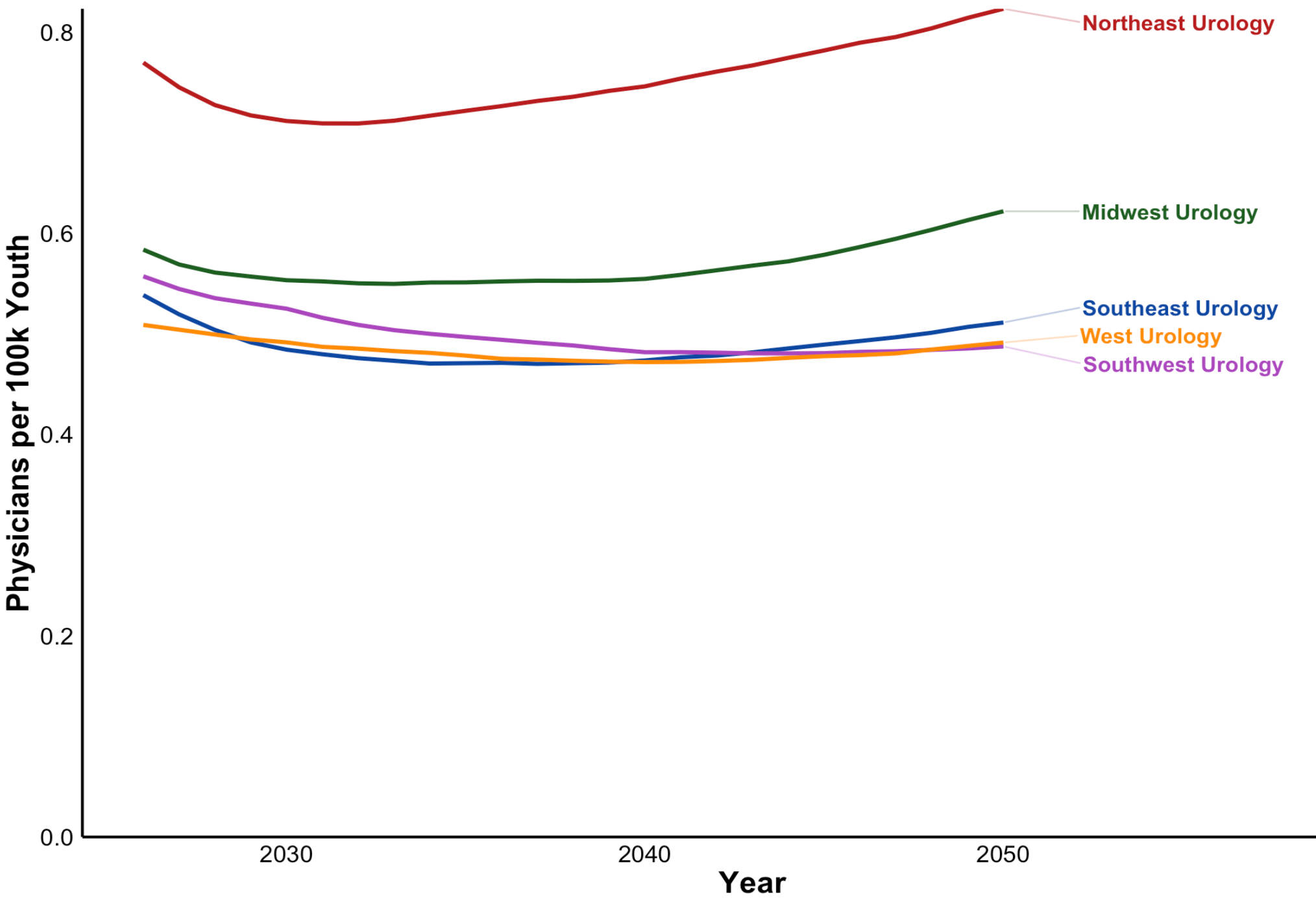
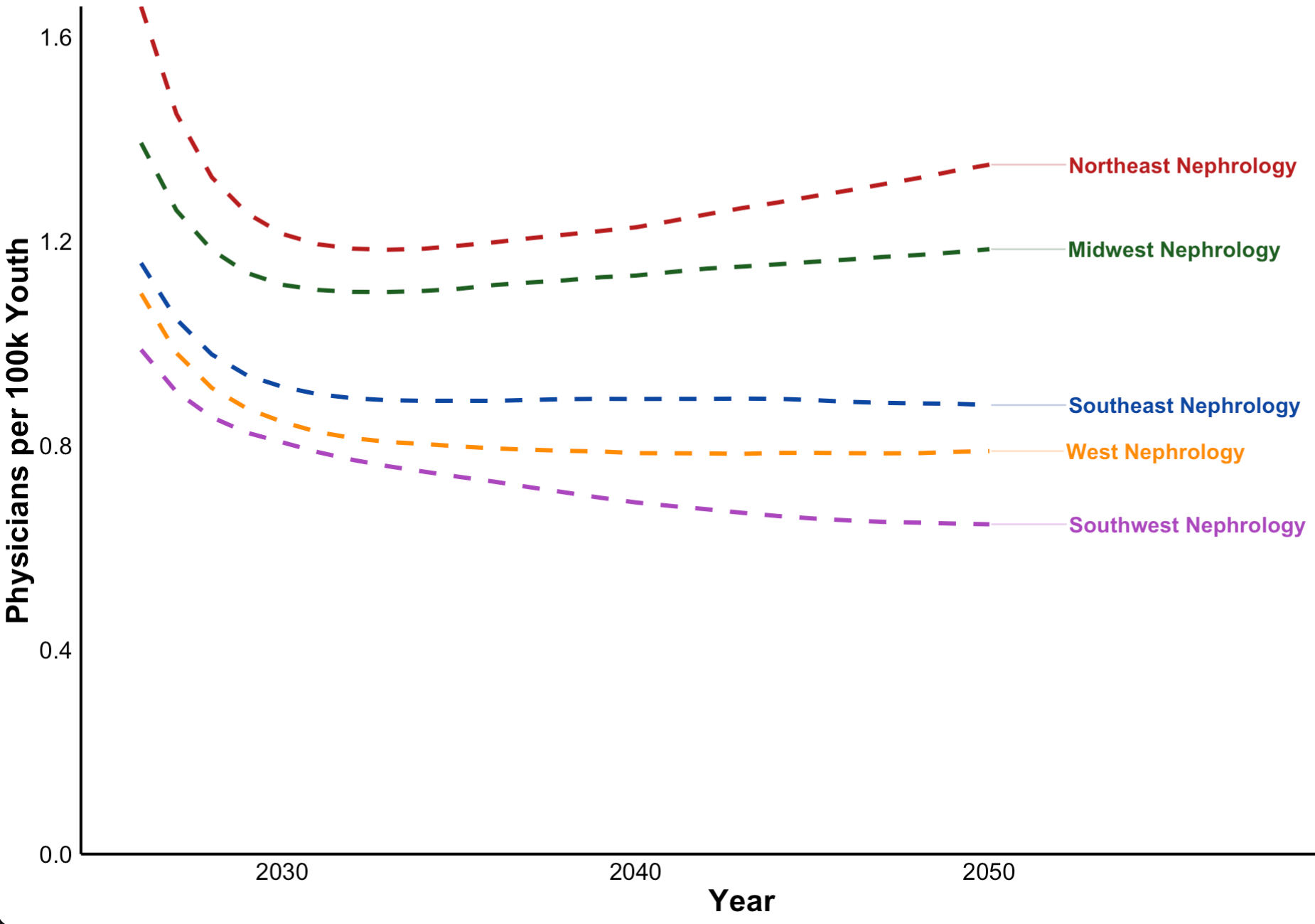
RESULTS: Workforce projection models estimating physician density per 100,000 youth were analyzed across five United States regions. For pediatric urology, only the Midwest and Northeast recovered and exceeded their current physician densities by 2050 if the current training output is maintained. The West and Southwest regions had the lowest projected densities by 2050, with the Southwest demonstrating the greatest decline (0.07 physicians per 100,000 youth). Analyzing growth projections, all regions except the Southwest were able to meet or exceed their current densities by 2050. Decline projections showed that no region was able to maintain their physician density, with regions declining by 2-20%.If the current training output is maintained, the number of pediatric nephrologists will drop significantly by 2050. No region, including under growth models, was projected to recover its current physician density by 2050. The West and Southwest had the lowest current (1.10 and 0.98, respectively) and projected (0.79 and 0.64, respectively) densities by 2050. This corresponded with a net decrease of approximately 26 and 37 physicians in the Southwest and West, respectively. Within the decline model, physician densities dropped by 22-40% across the country.
CONCLUSIONS: Pediatric urology and nephrology face projected declines in the coming years, with declines in nephrology being particularly severe. This underscores the need for targeted recruitment and retention strategies, particularly in the West and Southwest, where projected physician densities are the lowest. Maintaining these workforces is essential to preserve the interdisciplinary care necessary for children with congenital renal and urologic conditions across the country.
Back to 2026 Abstracts


