Back to 2026 Abstracts
The Hidden Caveat of Pediatric CAP: Coverage Gaps May Matter More Than Antibiotic Resistance From Duration
Jin Kyu (Justin) Kim, MD, MS, Konrad Szymanski, MD, MS, Joshua Roth, MD, PhD, Benjamin Whittam, MD, MS, Zoe Gückien, MD, MBA, Kirstan Meldrum, MD, Mark Cain, MD, Martin Kaefer, MD, Nikhil Batra, MD, Richard Rink, MD, Rosalia Misseri, MD.
Riley Hospital for Children, Indianapolis, IN, USA.
BACKGROUND:Continuous antibiotic prophylaxis (CAP) is widely used in pediatric urology, but rising antimicrobial resistance raises concerns about its long-term effectiveness. Oral agents such as trimethoprim-sulfamethoxazole (TMP-SMX) presume reliable uropathogen coverage that has not been reassessed in contemporary pediatric urology populations. We evaluated organism-specific susceptibility patterns and predictors of multidrug resistance (MDR) to inform a precision-medicine approach to CAP.
METHODS:We retrospectively analyzed 1339 monomicrobial urine cultures from 658 children (<18 years) followed in a tertiary pediatric urology clinic between 2022-2024 (all available cultures from 2001-2024). MDR was defined using Magiorakos 2012 criteria with intrinsic-resistance suppression. A multivariable generalized estimating equation (GEE) clustered by patient modeled MDR as a function of organism group (
E. coli [reference], other Enterobacterales, other non-Enterobacterales), age, sex, cumulative prophylaxis duration, recent antibiotic exposure (treatment within 30 days), hospitalization, VUR, other anatomic abnormalities, and recurrent versus index culture.
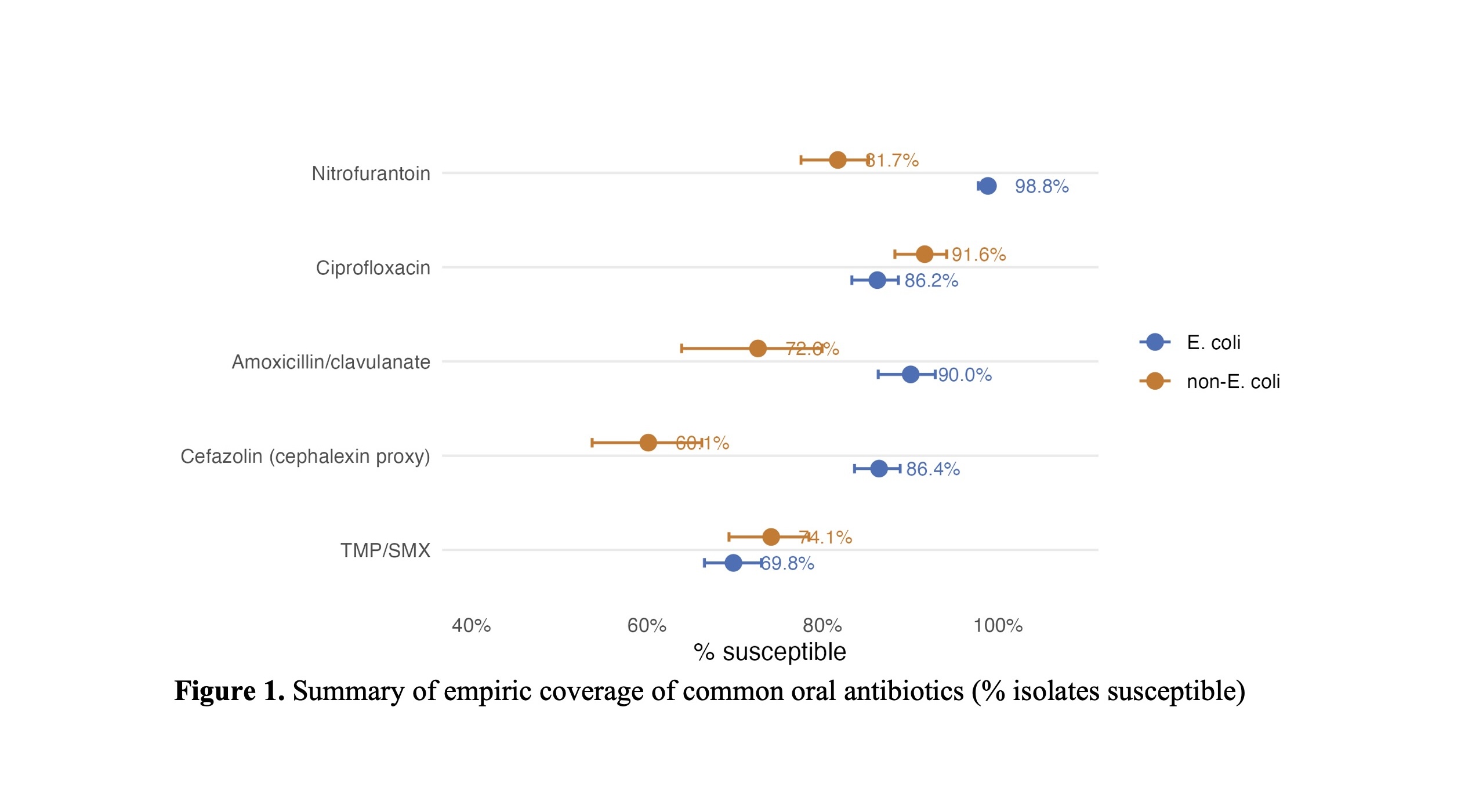
RESULTS:E. coli accounted for 59.1% of isolates, and 69.9% of patients were receiving CAP at index UTI. TMP-SMX demonstrated limited coverage against both
E. coli (69.8% susceptible) and non-
E. coli organisms (74.1%). Nitrofurantoin retained excellent activity against
E. coli (98.8%) but performed less well against non-
E. coli pathogens (81.7%), largely due to resistance among
Klebsiella pneumoniae (28.7%) and
Enterobacter species (15.8%). Ciprofloxacin provided the highest non-
E. coli coverage (91.6%;
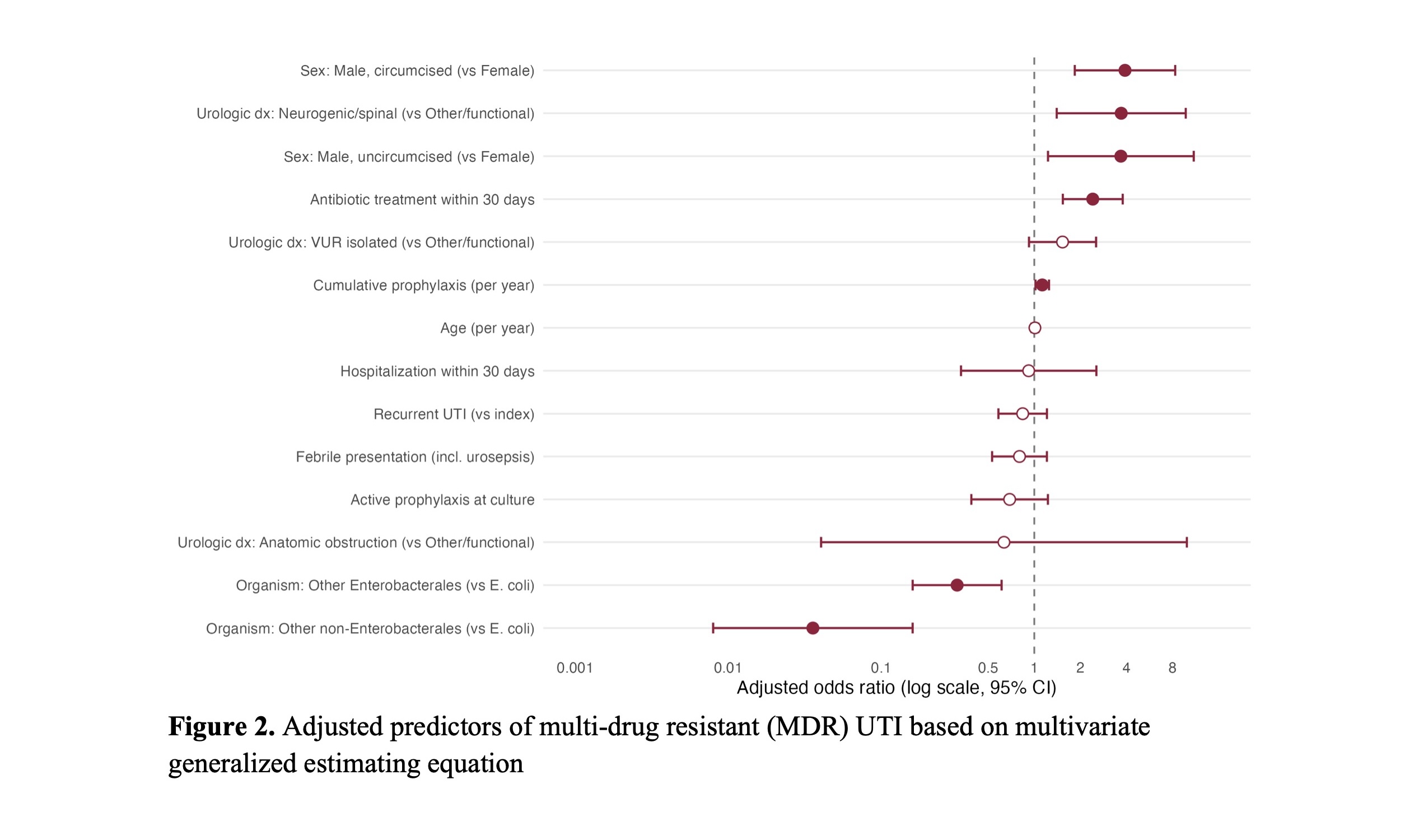
Figure 1). In the multivariable GEE, independent predictors of multidrug resistance (MDR) included male sex (similar risk in circumcised [aOR 3.92, 95% CI 1.84-8.34] and uncircumcised boys [aOR 3.68, 95% CI 1.23-11.0] versus girls), antibiotic treatment within 30 days (aOR 2.41, 95% CI 1.54-3.78), and neurogenic bladder (aOR 3.70, 95% CI 1.40-9.77). Prophylaxis duration showed a small association with MDR (aOR 1.13 per year, 95% CI 1.02-1.25, p=0.022). Compared with
E. coli, other Enterobacterales (aOR 0.31, 95% CI 0.16-0.61) and non-Enterobacterales (aOR 0.04, 95% CI 0.008-0.16) were less likely to exhibit MDR. Febrile presentation, active prophylaxis at culture, isolated VUR, recent hospitalization, or recurrent culture status were not independently associated with MDR (
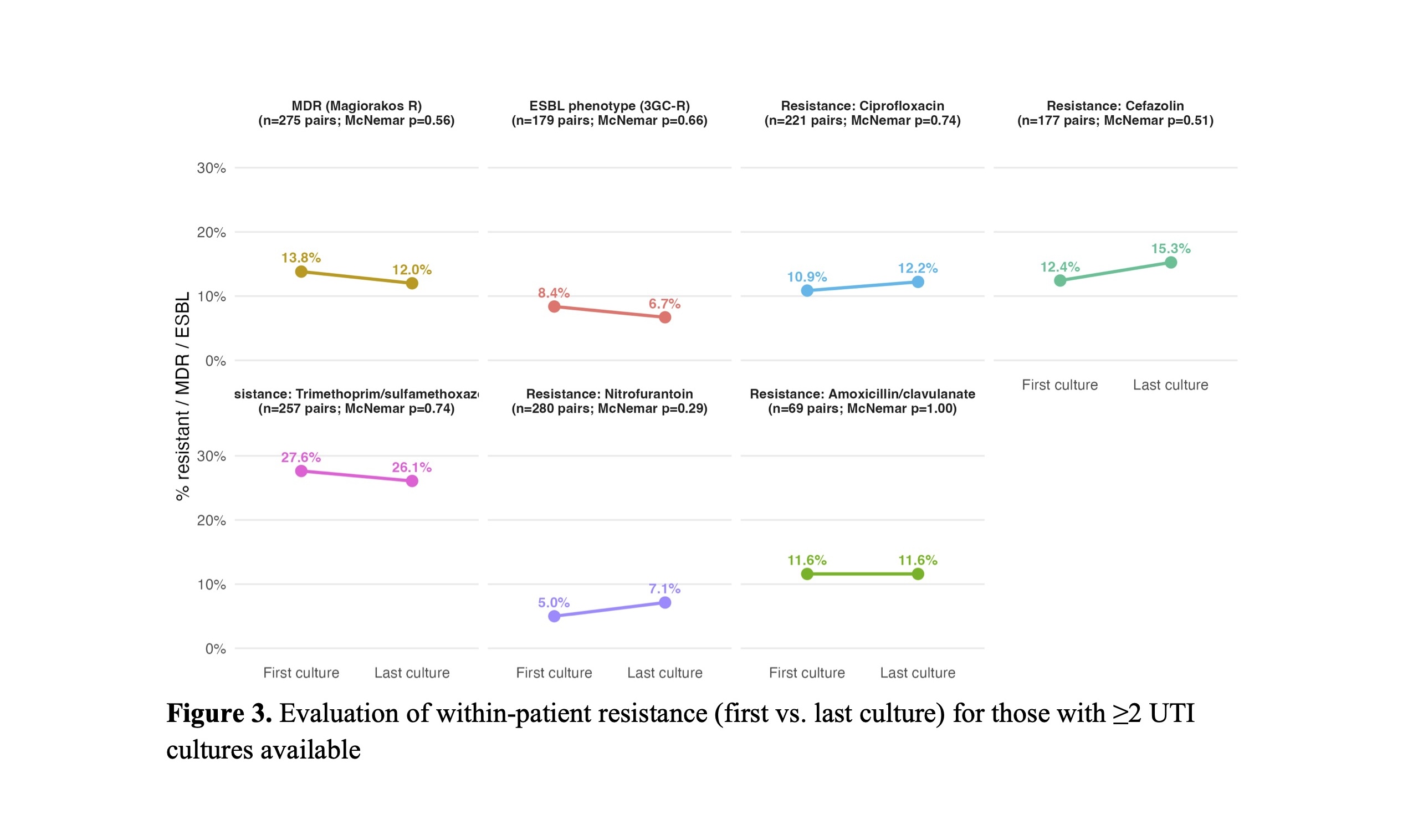
Figure 2). Within-patient paired analyses (n=275) showed no MDR or ESBL escalation across serial cultures, suggesting resistance differences reflected between-patient heterogeneity rather than within-host acquisition (
Figure 3).
CONCLUSIONS:The limitation of pediatric UTI prophylaxis may be the prophylactic agents themselves rather than exposure duration. TMP-SMX demonstrated inadequate coverage for both
E. coli and non-
E. coli organisms, while nitrofurantoin showed gaps against
Klebsiella and
Enterobacter. Recent antibiotic exposure, rather than cumulative CAP duration, was the strongest modifiable predictor of MDR. These findings support a precision-medicine approach to CAP that incorporates organism history, sex, and recent antibiotic exposure rather than uniform empiric prophylaxis.
Back to 2026 Abstracts


