Back to 2026 Abstracts
Ultrasound-Based Prenatal Risk Stratification for Fetuses with Features Consistent with Lower Urinary Tract Obstruction (LUTO): Introducing the pre-PURK Score
Jin Kyu (Justin) Kim, MD1, Joana Dos Santos, MD, MHSc2, Tim Van Mieghem, MD, PhD2, Shiri Shinar, MD3, Samer Maher, MD2, Adree Khondker, MD2, Pippi Salle, MD, PhD2, Rodrigo Romao, MD, MSc2, Michael Chua, MD, MASc, DSc2, Armando J. Lorenzo, MD, MSc2, Mandy Rickard, MN-NP2.
1Riley Hospital for Children, Indianapolis, IN, USA, 2The Hospital for Sick Children, Toronto, ON, Canada, 3Mount Sinai Hospital, Toronto, ON, Canada.
BACKGROUND:Prognostic counselling for fetuses with suspected posterior urethral valves (PUV) relies on assessment of prenatal ultrasound findings. The postnatal PURK score accurately predicts CKD progression using clinical characteristics at presentation, but no equivalent tool exists prenatally. We aimed to develop a similar score (prenatal PURK [pre-PURK]) using antenatal ultrasound features, and to validate its performance in an updated, expanded institutional cohort.
METHODS:We combined a prospectively maintained prenatal PUV database with additional prenatally diagnosed patients identified from our institutional PUV registry (2005-2026). Patients with confirmed PUV, prenatal diagnosis, and ≥1 year of follow-up were included. Prenatal ultrasound features were extracted from the first diagnostic scan. Univariate analysis (Fisher’s exact test) identified candidate predictors of CKD stage ≥3 at most recent follow-up. Significant predictors were entered into multivariable logistic regression; β-coefficients informed score construction. Predictive performance was assessed by AUROC and compared to postnatal PURK performance in the same cohort.
RESULTS:One hundred and forty-four patients were included (median follow-up 1744 days; 36% CKD ≥3; 14% RRT). On univariate analysis, oligohydramnios (43% vs. 13% CKD ≥3; p<0.001) and sonographic findings suggestive of renal dysplasia (81% vs. 19%; p<0.001) were significantly associated with CKD ≥3. Megacystis, bilateral hydroureteronephrosis, bladder wall thickening, and keyhole sign were not independently significant in the expanded cohort. Multivariable regression confirmed oligohydramnios (OR 3.4, 95% CI 1.3-8.4; p = 0.009) and sonographic renal dysplasia (OR 14.9, 95% CI 3.7-59.2; p<0.001) as independent predictors (Table). These were used to derive the pre-PURK score (oligohydramnios = 1 point; sonographic renal dysplasia = 2 points; maximum 3). The pre-PURK demonstrated good discriminative performance, with AUROC of 0.77 and 0.74 for 1- and 5-year CKD ≥3, respectively. Postnatal PURK performance in the same cohort was 0.88 and 0.85, as expected given access to postnatal clinical data (Figure). Correlation between pre-PURK and PURK was moderate (Spearman’s ρ = 0.50, p<0.001).
CONCLUSIONS:In an expanded cohort, the pre-PURK score is simplified to two prenatal ultrasound features — oligohydramnios and sonographic renal dysplasia — and demonstrates good accuracy for predicting early and long-term CKD in fetuses with suspected PUV. Performance is modestly lower than the postnatal PURK, as expected, but supports its use as part of a structured prenatal counselling tool pending external validation.
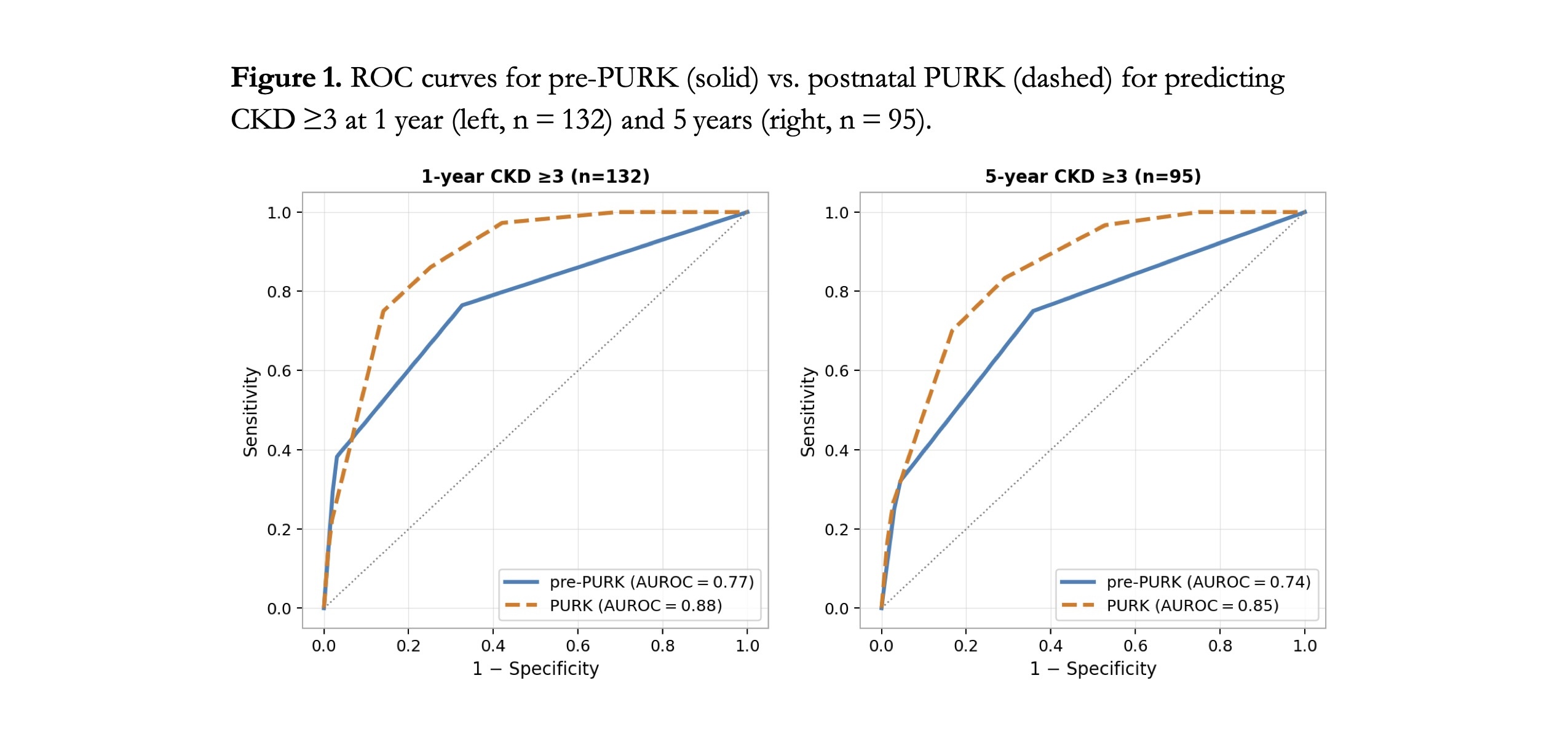
Table 1. Multivariable logistic regression: independent predictors of CKD ≥3.| Predictor | OR | 95% CI | p |
| Oligohydramnios | 3.4 | 1.3-8.4 | 0.009 |
| Sonographic renal dysplasia | 14.9 | 3.7-59.2 | <0.001 |
| Megacystis | 1.0 | - | 0.92 |
Back to 2026 Abstracts


