Back to 2026 Abstracts
Predictors of Recurrent Urinary Tract Infections in Posterior Urethral Valves; The Role of Diversion, Catheterization, and Baseline Severity
Innocent N. Nzeyimana N, MD, Joana Rosa Pereira Dos Santos, MD, Nithiakishna Selvathesan, MD, Chia Wei Teoh, MD, Ashlene McKay, MD, Adree Khondker, MD, Samer Maher, MHSc, Joao Luiz Pippi Salle, MD, Rodrigo Romao, MD, Michael Chua, MD, Armando J. Lorenzo, MD, Mandy Rickard, NP.
The Hospital for Sick Children, Toronto, ON, Canada.
Background: Recurrent urinary tract infection (rUTI) is a major driver of morbidity in posterior urethral valves (PUV), yet risk prediction is confounded when downstream interventions are misclassified as baseline predictors. We hypothesized that commonly cited risk factors reflect treatment response rather than true predisposing risk, and that temporally corrected modelling would reframe risk attribution.
Methods: Retrospective cohort study of 151 patients with PUV with complete rUTI outcome data. Primary outcome: rUTI (≥3 UTI episodes). Candidate predictors included initial management (primary ablation vs. any diversion), clean intermittent catheterization (CIC), high-grade vesicoureteral reflux (VUR ≥4), circumcision, and treatment era. Multivariable logistic regression was performed. To address reverse causality, CIC was reclassified by timing relative to the first UTI: proactive (CIC initiated before the first UTI) versus reactive. Temporal relationships between CIC initiation and the first UTI were explicitly analyzed.
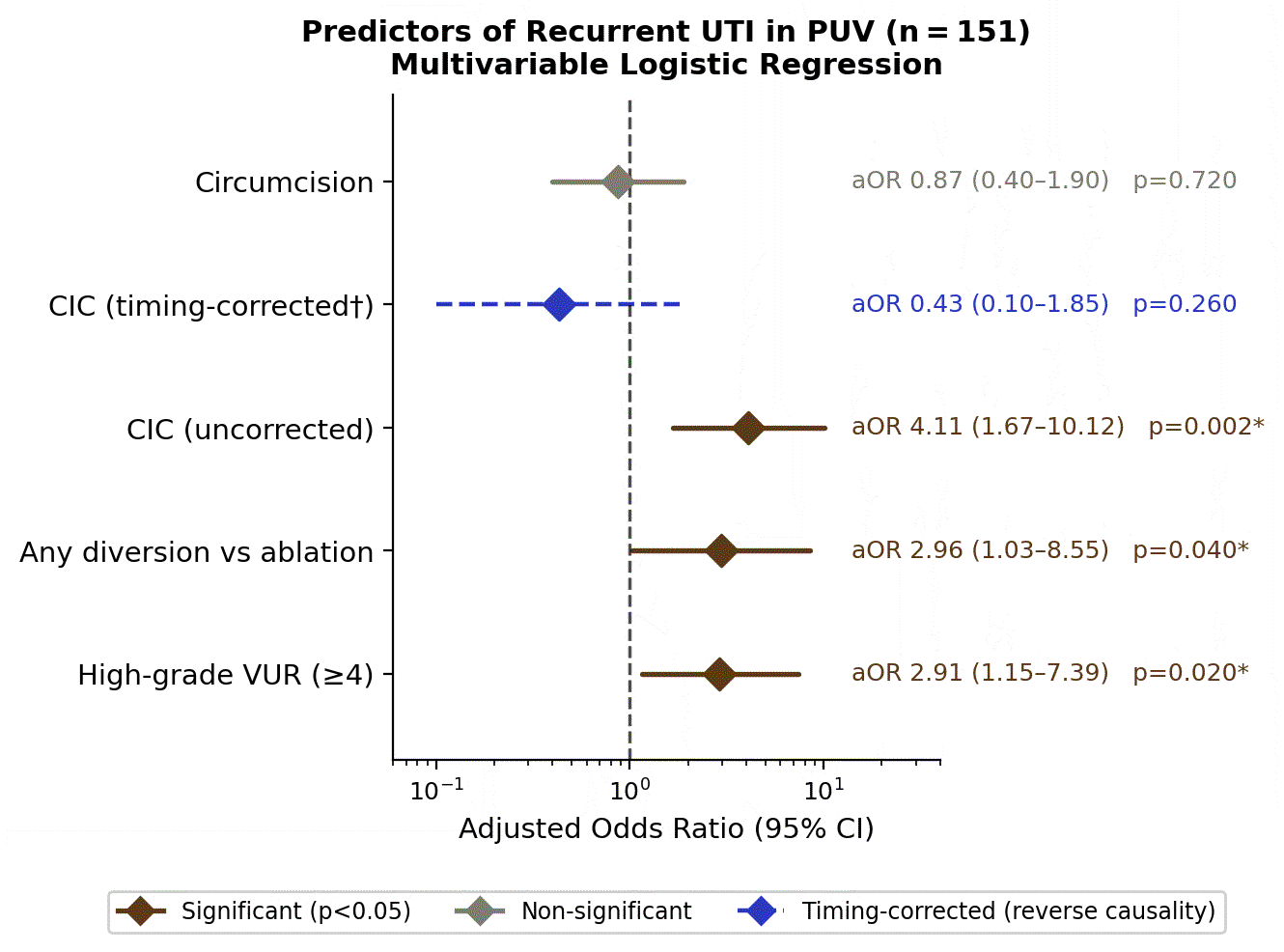
Results: rUTI occurred in 62% of diverted patients vs. 36% after primary ablation (p = 0.003). Among diverted patients, infections occurred predominantly during the active stoma phase rather than after closure; patients with infections spanning both phases had the highest rUTI rate (83%). Both vesicostomy and ureterostomy carried similarly elevated rUTI rates (65% vs 58%, p=0.60), and PURK >/= 3 was similar regardless of initial management (42% ablation vs. 56% diversion; =0.12). In multivariable analysis, high-grade VUR independently predicted rUTI (aOR = 2.91, 95% CI 1.15-7.39; p = 0.020), as did diversion vs ablation (aOR = 2.96, 95% CI 1.03-8.55; p = 0.040). CIC appeared to confer substantial risk in the uncorrected model (aOR = 4.11, 95% CI 1.67-10.12; p = 0.002). However, temporal analysis revealed critical bias: median CIC initiation was 4.0 years vs median age at first UTI of 0.3 years, and CIC was started reactively after the first UTI in 77% of CIC patients (n = 66 with timing data). After timing correction, the association reversed: CIC was no longer associated with increased rUTI risk and trended toward protection (aOR = 0.43, 95% CI 0.10-1.85; p = 0.260) (Figure 1). Circumcision was not independently associated with rUTI (aOR = 0.87, 95% CI 0.40-1.90; p = 0.720); 86% of patients were already circumcised, limiting power to detect a protective effect in this cohort.
Conclusion: Risk modeling in PUV is highly sensitive to temporal bias. The apparent harm attributed to CIC reflects reverse causality; when initiated proactively, CIC may be protective rather than harmful. High-grade VUR and the need for diversion are independent risk factors that identify patients who warrant intensified surveillance and early intervention. These findings support time-aware modeling as essential for valid risk prediction in PUV.
Figure 1. Forest plot of multivariable predictors of recurrent UTI in PUV (n = 151). Dark blue: significant predictors (p<0.05); gray: non-significant; red dashed: CIC after timing correction for reverse causality. The timing-corrected CIC estimate (aOR = 0.43) reverses the direction of the uncorrected estimate (aOR = 4.11), demonstrating that the original association was driven by reverse causality. †CIC proactive = initiated before first UTI episode. *p<0.05.
Back to 2026 Abstracts


