Back to 2026 Abstracts
Comparative Analysis of Ureteral Reimplantation and Dextranomer/Hyaluronic Acid Injection Between Two Centers with Systematic Review and Meta-Analysis
Jin Kyu (Justin) Kim, MD, MS1, Beverly Miranda, MN2, Mandy Rickard, MN, NP2, Adree Khondker, MD2, Martina Bruniera, MD2, Mirriam Mikhail, MN2, Renee Cimpanu, MD1, Konrad Szymanski, MD, MPH1, Martin Kaefer, MD1, Mark Cain, MD1, Richard Rink, MD1, Joshua Roth, MD, PhD1, Kirstan Meldrum, MD1, Benjamin Whittam, MD, MS1, Nikhil Batra, MD1, Michael Chua, MD, MASc, DSc2, Rodrigo Romao, MD, MSc2, Joao Pippi Salle, MD, PhD2, Joana Dos Santos, MD, MSc2, Armando Lorenzo, MD, MSc2, Rosalia Misseri, MD1.
1Riley Hospital for Children, Indianapolis, IN, USA, 2The Hospital for Sick Children, Toronto, ON, Canada.
BACKGROUND: Surgical management of pediatric vesicoureteral reflux (VUR) aims to reduce febrile urinary tract infections (fUTIs) while minimizing perioperative morbidity. We compared dextranomer/hyaluronic acid (Dx/HA) injection with ureteral reimplantation, focusing on durability, infectious outcomes, and perioperative burden.
METHODS: We conducted an era- and indication-matched retrospective two-center cohort study (January 2018-December 2025) of children <18 years treated for recurrent UTIs with Dx/HA or reimplantation, alongside a PRISMA-guided systematic review and meta-analysis (MEDLINE, Embase, Scopus; inception-December 2025; PROSPERO CRD420251154210). Outcomes included radiographic resolution, reoperation, postoperative fUTIs, operative time, and length of stay (LOS). Random-effects models were used; heterogeneity was assessed with tau2 and bias with RoB 2.0/ROBINS-I.
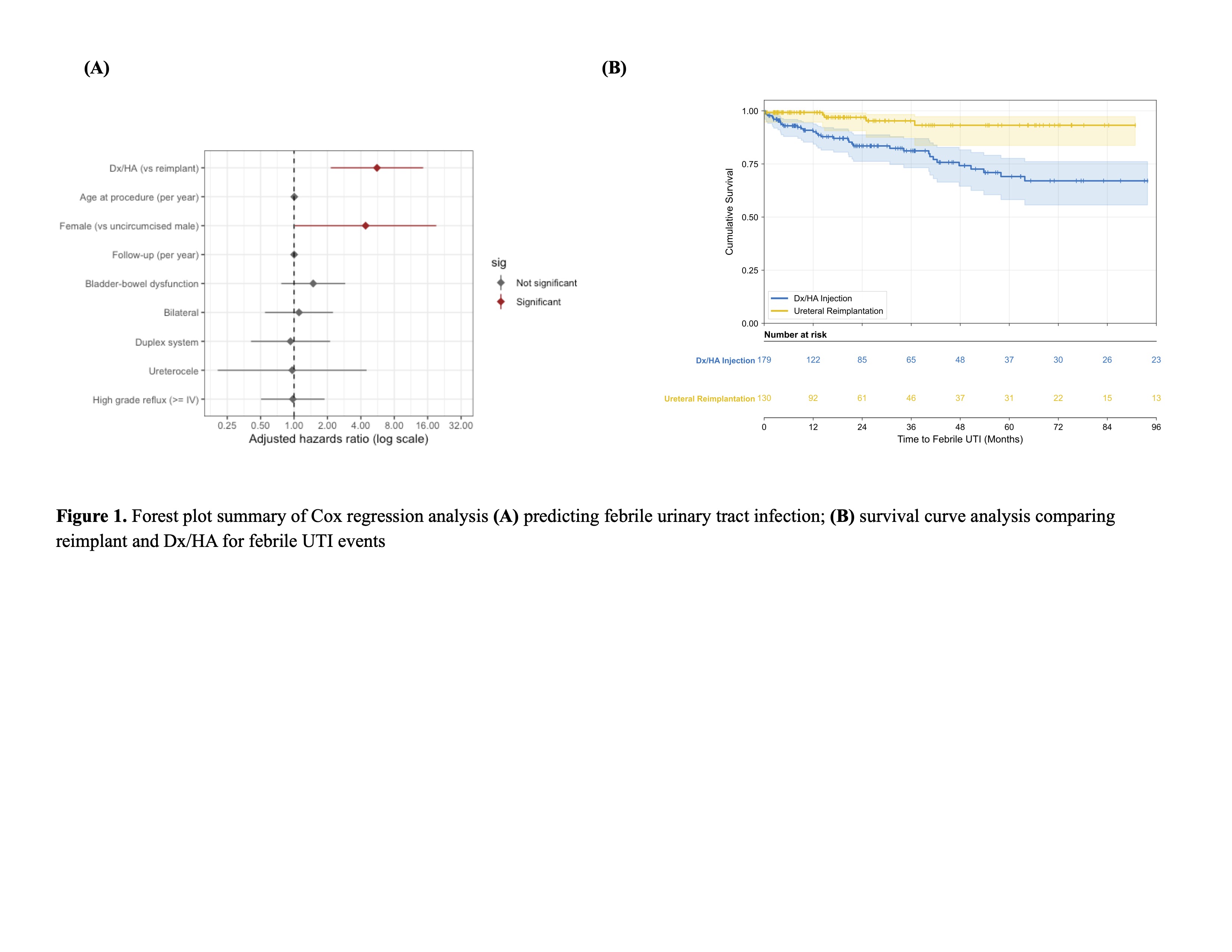
RESULTS: Institutional cohorts included 179 Dx/HA and 130 reimplantations. Dx/HA had shorter operative time (21 vs 140 min; p<0.001) and LOS (0 vs 1 day; p<0.001). Thirty-day ED visits, readmissions, non-UTI complications, and redo surgery did not differ (all p>0.2). Postoperative UTI (19.6% vs 3.8%; p<0.001) and recurrent UTI (11.7% vs 1.5%; p<0.001;
Figure 1A) were higher after Dx/HA; procedure type independently predicted UTI (HR 5.6, 95% CI 2.1-14.6; p<0.001;
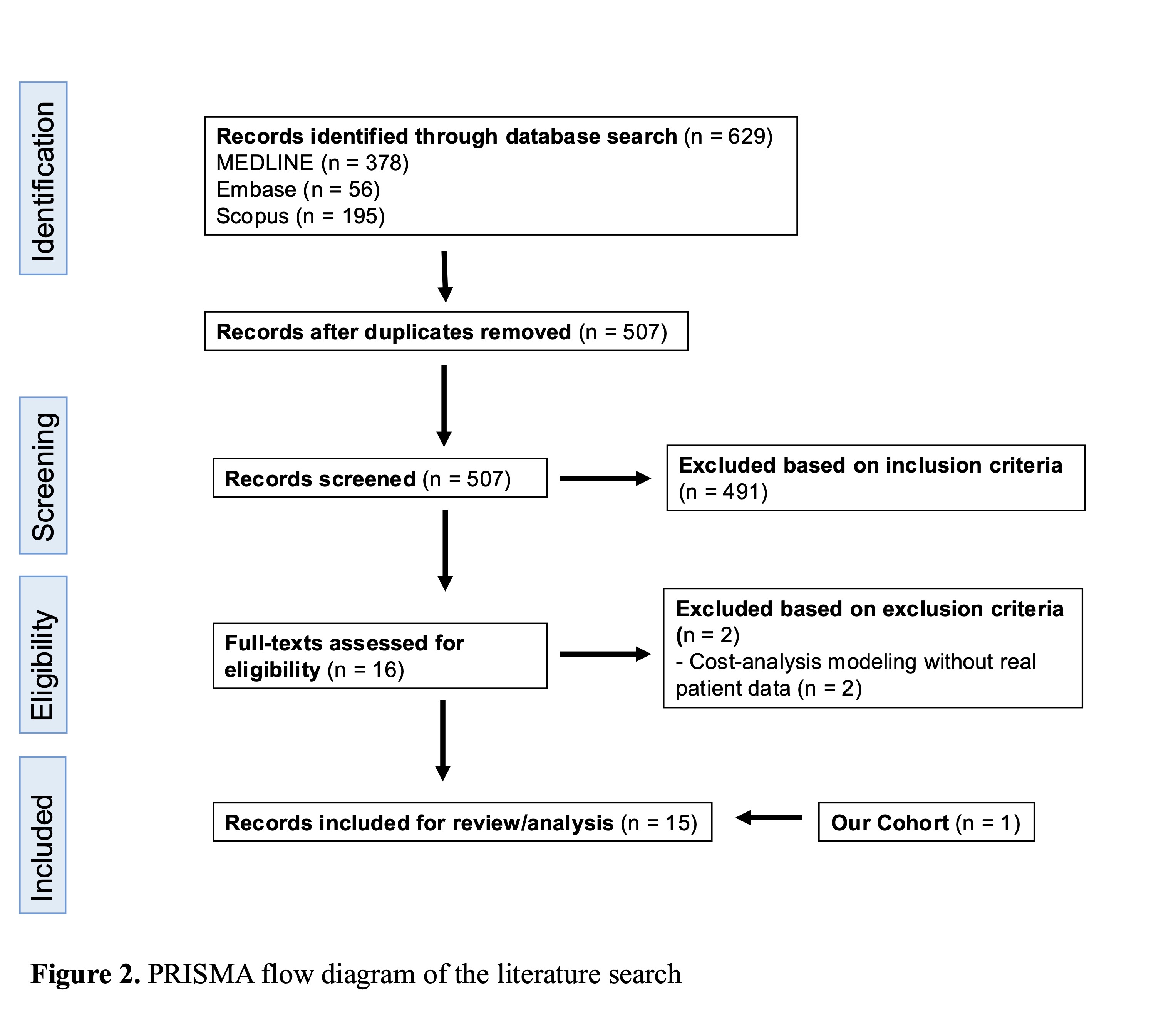
Figure 1B). Meta-analysis (15 studies;
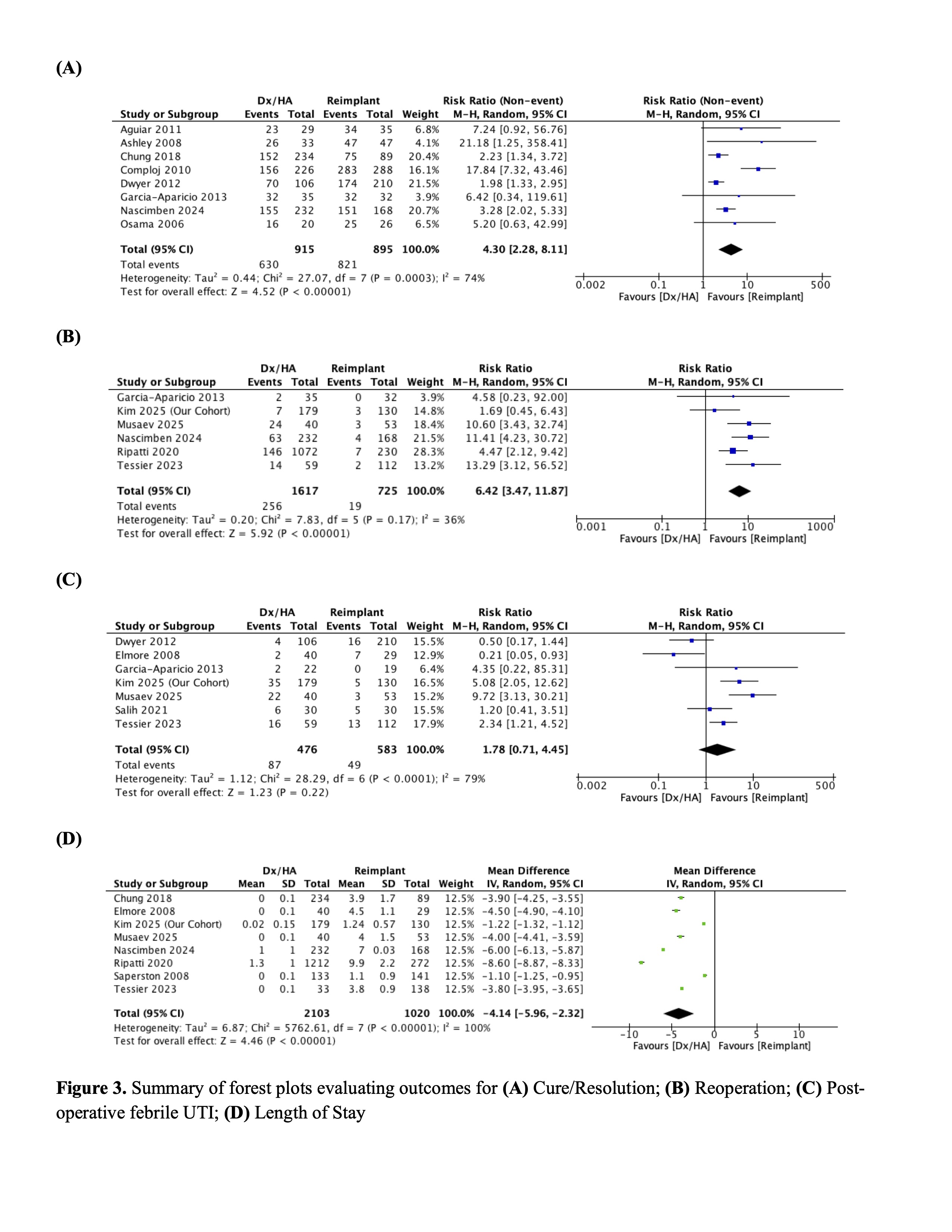
Figure 2) favored reimplantation for radiographic resolution (RR for non-resolution 4.30; p=0.0003; tau2=0.44;
Figure 3A) and reoperation (RR 6.42; p<0.00001; tau2=0.20;
Figure 3B), while febrile/recurrent UTI did not differ (tau2=1.12;
Figure 3C). Evidence certainty was limited by heterogeneity and predominantly non-randomized data.
CONCLUSIONS:Ureteral reimplantation has lower likelihood of reoperation and with possibly postoperative UTI risk, while Dx/HA offers meaningful perioperative advantages. These trade-offs support individualized, risk-adapted surgical decision-making for pediatric VUR.
Back to 2026 Abstracts


