Back to 2026 Display Posters
Impact of Genetic Syndromes on Postoperative Outcomes in Pediatric Urologic Surgery: A Multi-Institutional Retrospective Cohort Study
Austin Schults, MD1, Christine Do, DrPH1, Keith Hazleton, MD1, Janet Choi, MD2, Roger De Filippo, MD1.
1Children's Hospital Los Angeles, Los Angeles, CA, USA, 2University of Sothern California Keck Hospital, Los Angeles, CA, USA.
BACKGROUND: Identifying pediatric patients at elevated risk for postoperative complications is critical to improving surgical outcomes. While genetic syndromes are often presumed to increase perioperative risk, their impact in pediatric urology has not been well characterized. This study evaluates whether the presence of a genetic syndrome is associated with increased postoperative complications and reoperation rates following common pediatric urologic procedures.
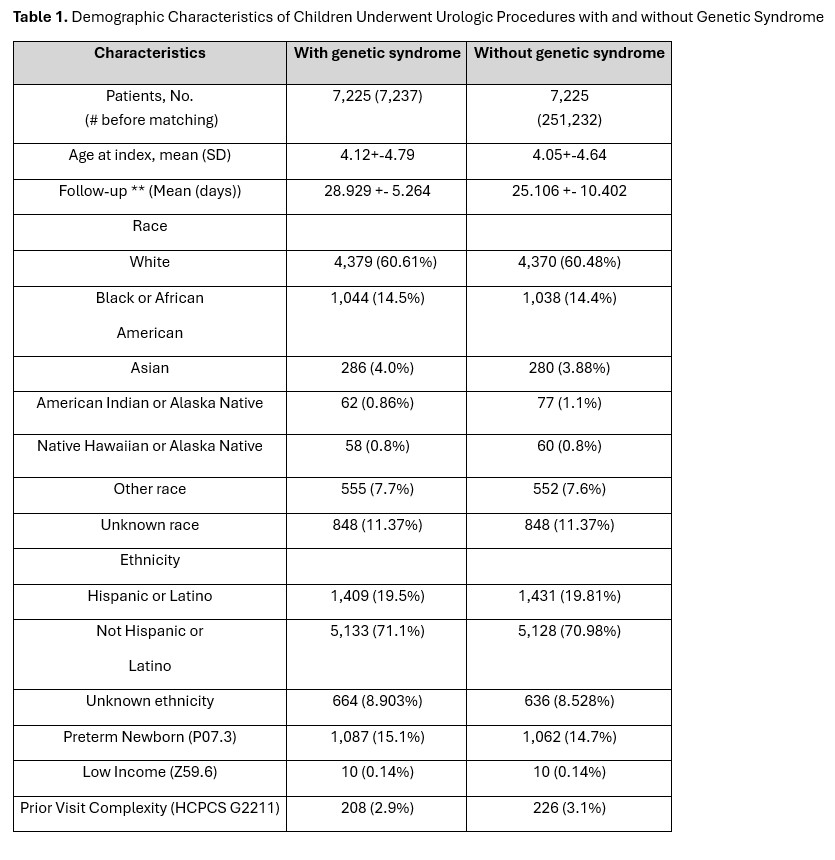
METHODS: We performed a retrospective cohort study using the TriNetX Research Network, which includes de-identified electronic health record data from 62 U.S. healthcare organizations over 20 years. Pediatric patients (<18 years) undergoing circumcision or unilateral orchidopexy were identified using CPT and ICD-10 codes. Patients with a documented genetic syndrome prior to surgery were compared to those without. Propensity score matching (1:1) was performed based on age, sex, race/ethnicity, prematurity, low-income status, and prior visit complexity. Primary outcome was any postoperative complication within 30 days. Secondary outcomes included specific complication types (e.g., wound infection, dehiscence, emergency department visits). Tertiary outcomes included reoperation rates up to 10 years. Odds ratios (OR) and hazard ratios (HR) with 95% confidence intervals (CI) were calculated.
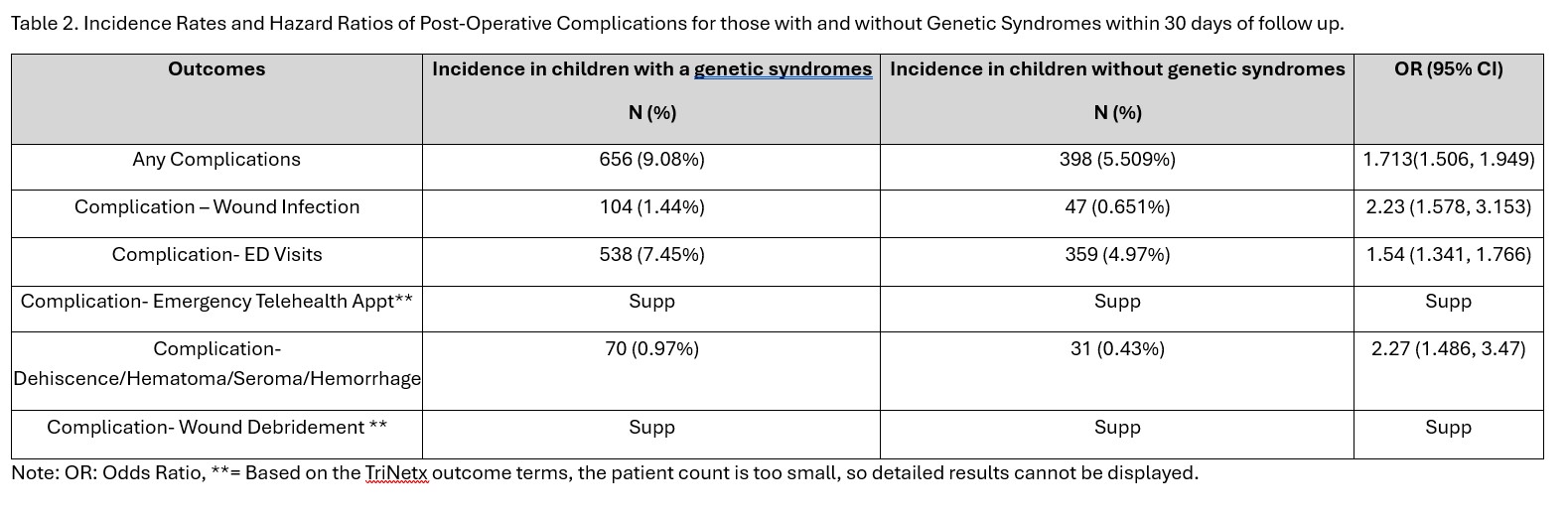
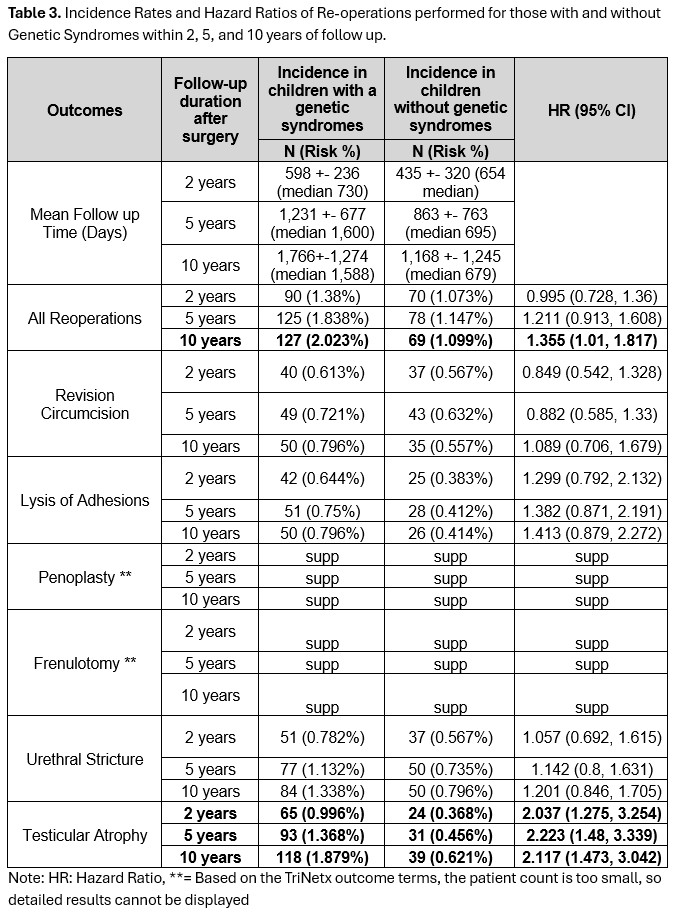
RESULTS: Among 258,469 patients, 7,237 had genetic syndromes. After matching, 7,225 patients were included in each cohort. The 30-day postoperative complication rate was significantly higher in patients with genetic syndromes (9.1% vs 5.5). These patients had nearly double the odds of complications (OR 1.71, 95% CI 1.51-1.95), with increased rates of wound infection, dehiscence, and emergency department utilization. Long-term reoperation risk, urethral stricture rate, and rate of testicular atrophy was also elevated, with a higher likelihood of reoperation at 10 years (HR 1.355, 95% CI 1.01-1.817). Subgroup analyses demonstrated increased risks across multiple complication domains and procedure types.
CONCLUSIONS: Pediatric patients with genetic syndromes undergoing common urologic surgeries experience significantly higher rates of short-term complications and long-term reoperations, urethral strictures, and testicular atrophy when compared to matched controls. These findings highlight the importance of recognizing genetic syndromes as a clinically meaningful risk factor. Enhanced perioperative planning, closer postoperative monitoring, and tailored management strategies may help mitigate these risks and improve outcomes in this vulnerable population.
Back to 2026 Display Posters


