Back to 2026 Display Posters
A conserved obstruction-injury signature: towards biomarkers for persistent obstruction following pediatric urinary tract reconstruction
Jin Kyu (Justin) Kim, MD.
Riley Hospital for Children, Indianapolis, IN, USA.
BACKGROUND:Children undergoing urinary tract reconstruction for obstructive uropathy may remain at risk for persistent or recurrent obstruction, but current follow-up relies heavily on imaging and functional studies. Molecular biomarkers measurable in urine or serum could help identify children with ongoing obstruction-associated injury after reconstruction. We aim to identify conserved obstruction-injury candidate biomarkers (biomarkers that are consistently associated across species and/or studies with tissue injury caused by obstruction, especially in the setting of obstructive nephropathy) that may be translatable to urine or serum testing for persistent obstruction risk in children after urinary tract reconstruction.
METHODS:We performed a validation-first public-data reanalysis integrating pediatric ureter molecular data with mouse unilateral ureteral obstruction (UUO), independent mouse UUO validation, orthogonal adult human obstruction single-nucleus pseudobulk data, and a human kidney single-cell atlas. The pediatric discovery cohort was restricted to the unmodified/supernatant RNA fraction from GSE195849 and compared primary obstruction with vesicoureteral reflux. Candidate genes were required to show mouse acute-injury support, obstruction-aligned pediatric signal, and leave-one-out directional stability. The resulting module was evaluated for independent mouse validation, orthogonal human obstruction support, kidney compartment localization, and repair reversibility.
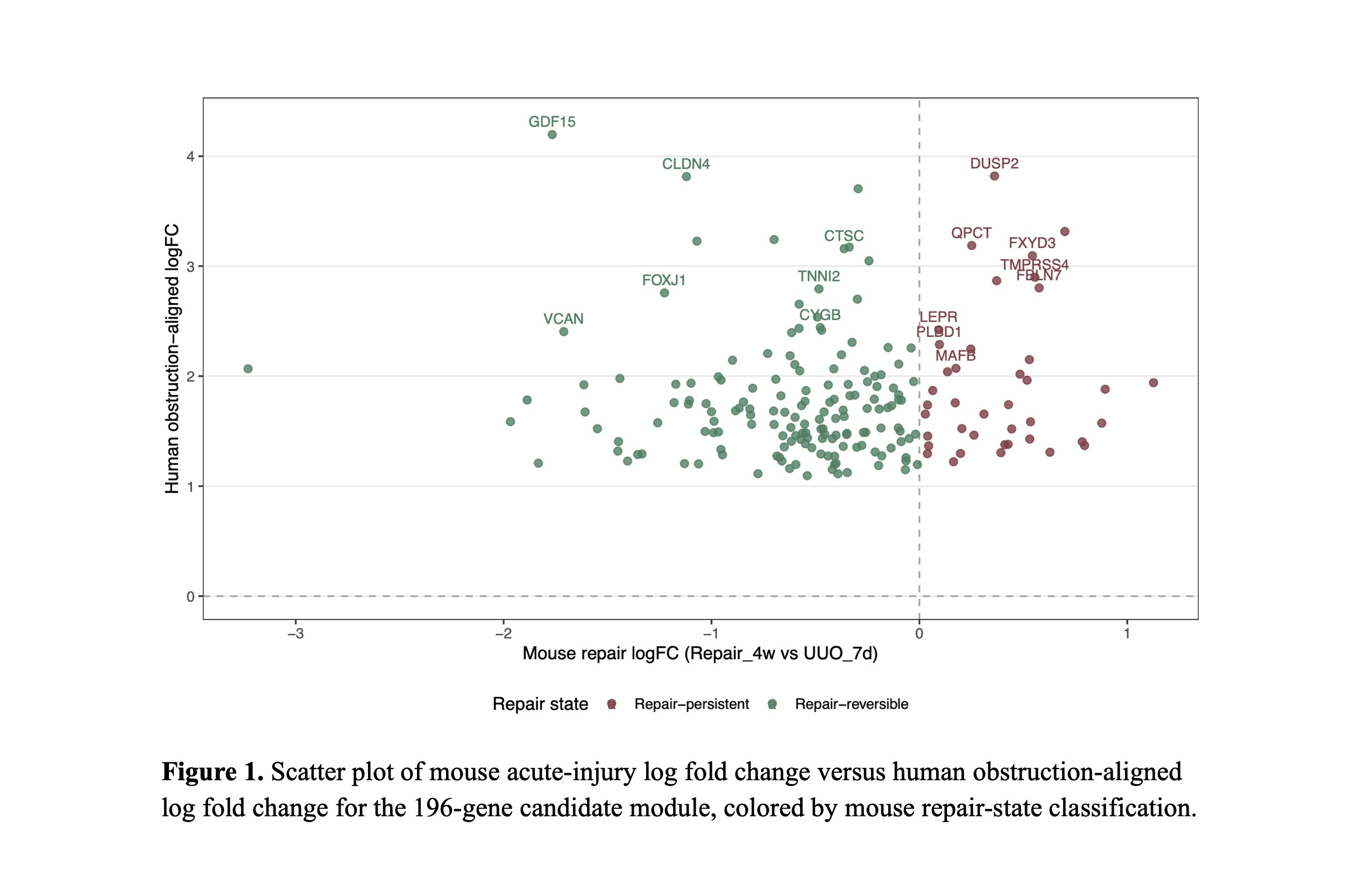
RESULTS:The pediatric discovery cohort was underpowered, with no FDR-significant single genes, but yielded a 196-gene directionally conserved obstruction-injury candidate module (
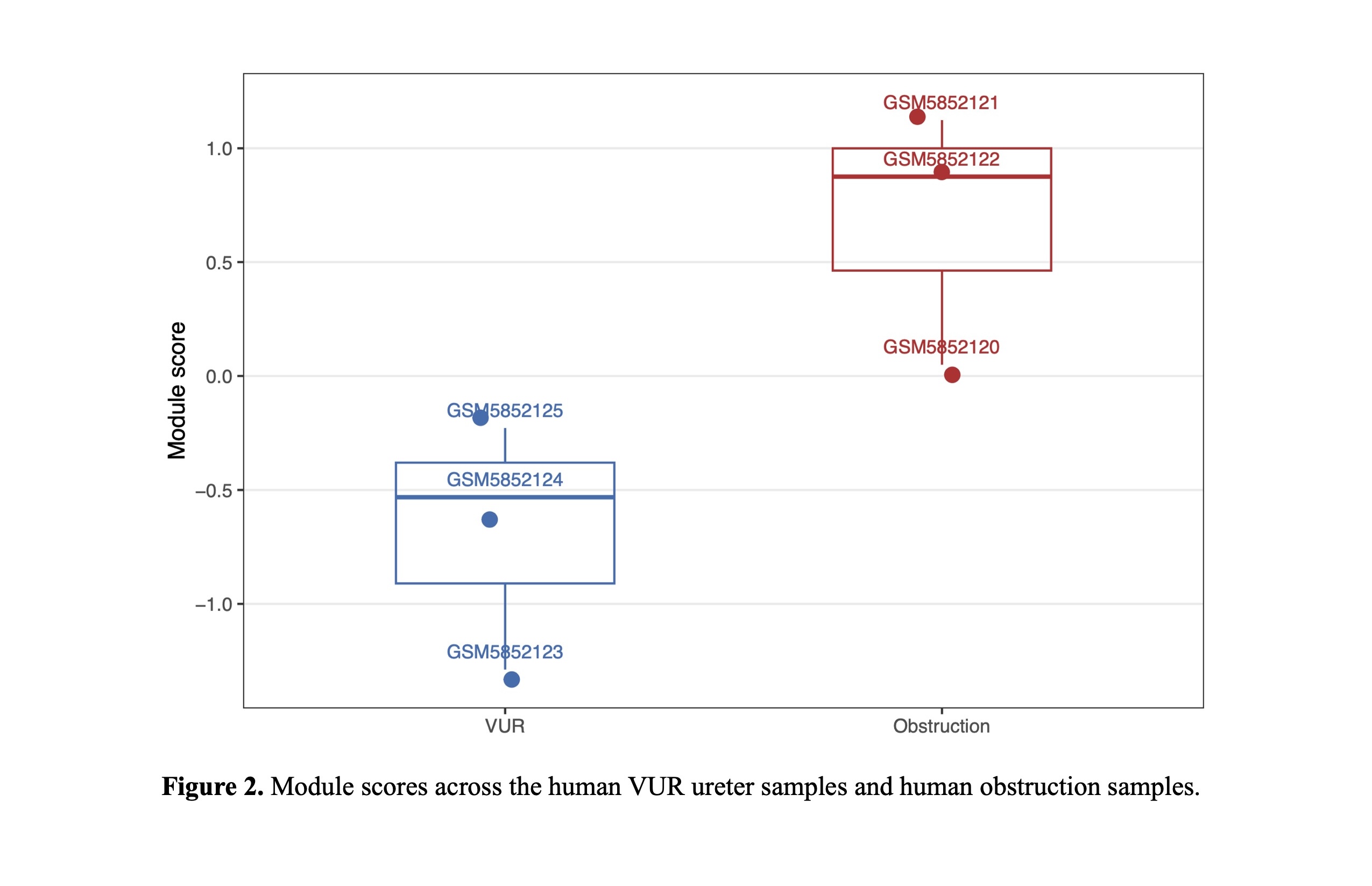
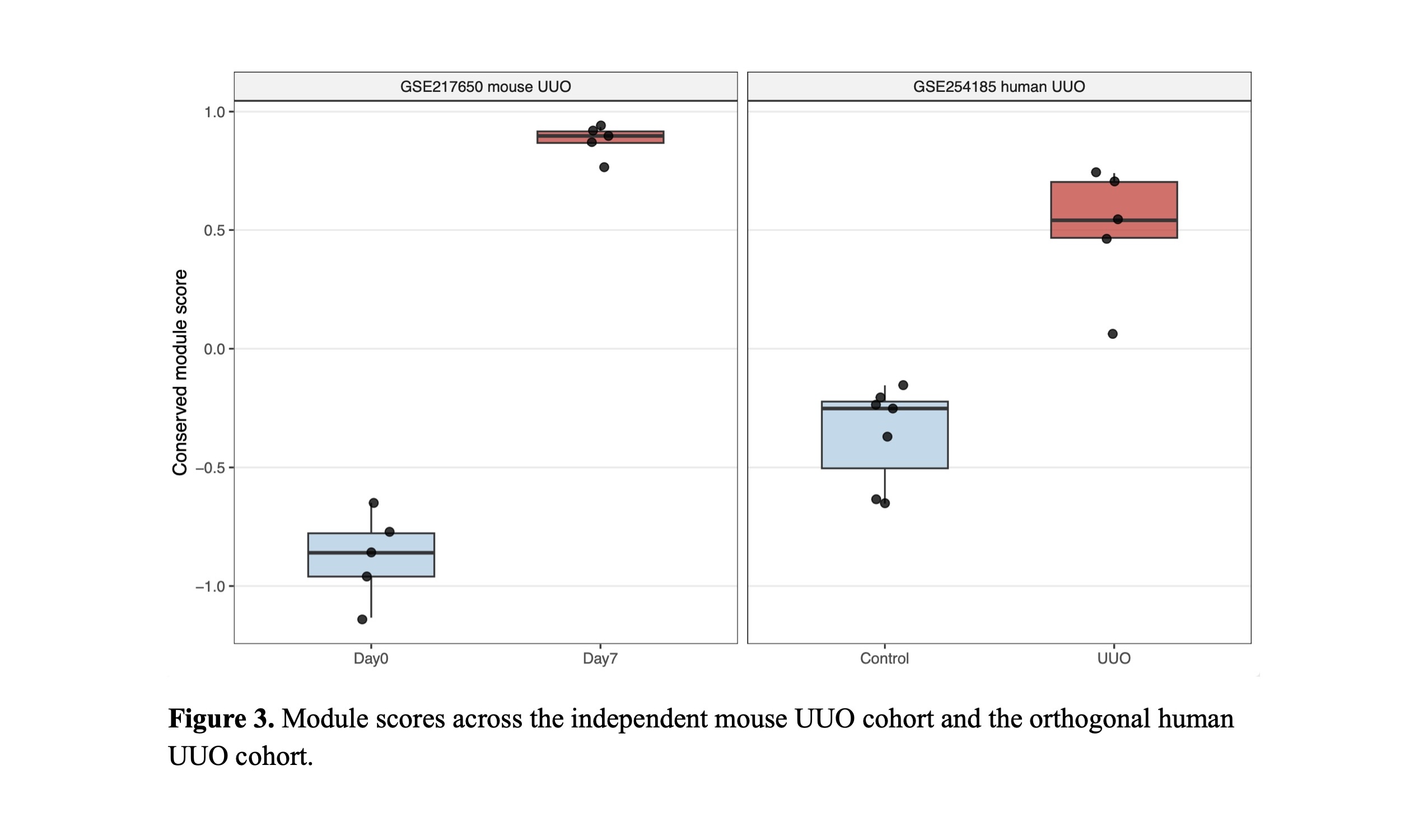
Figure 1). Global cross-species overlap enrichment was not significant, but direction concordance was strong (86%, p < 0.001). The module was strongly increased in independent mouse UUO and in orthogonal adult human UUO pseudobulk data. The module replicated robustly in independent datasets (GSE217650, GSE254185), with nearly all genes maintaining consistent direction of effect (
Figure 2/3). Candidate translational biomarkers included injury, inflammatory, epithelial, and remodeling-associated genes such as
GDF15, POSTN, CXCL16, DKK3, TGFBI, and
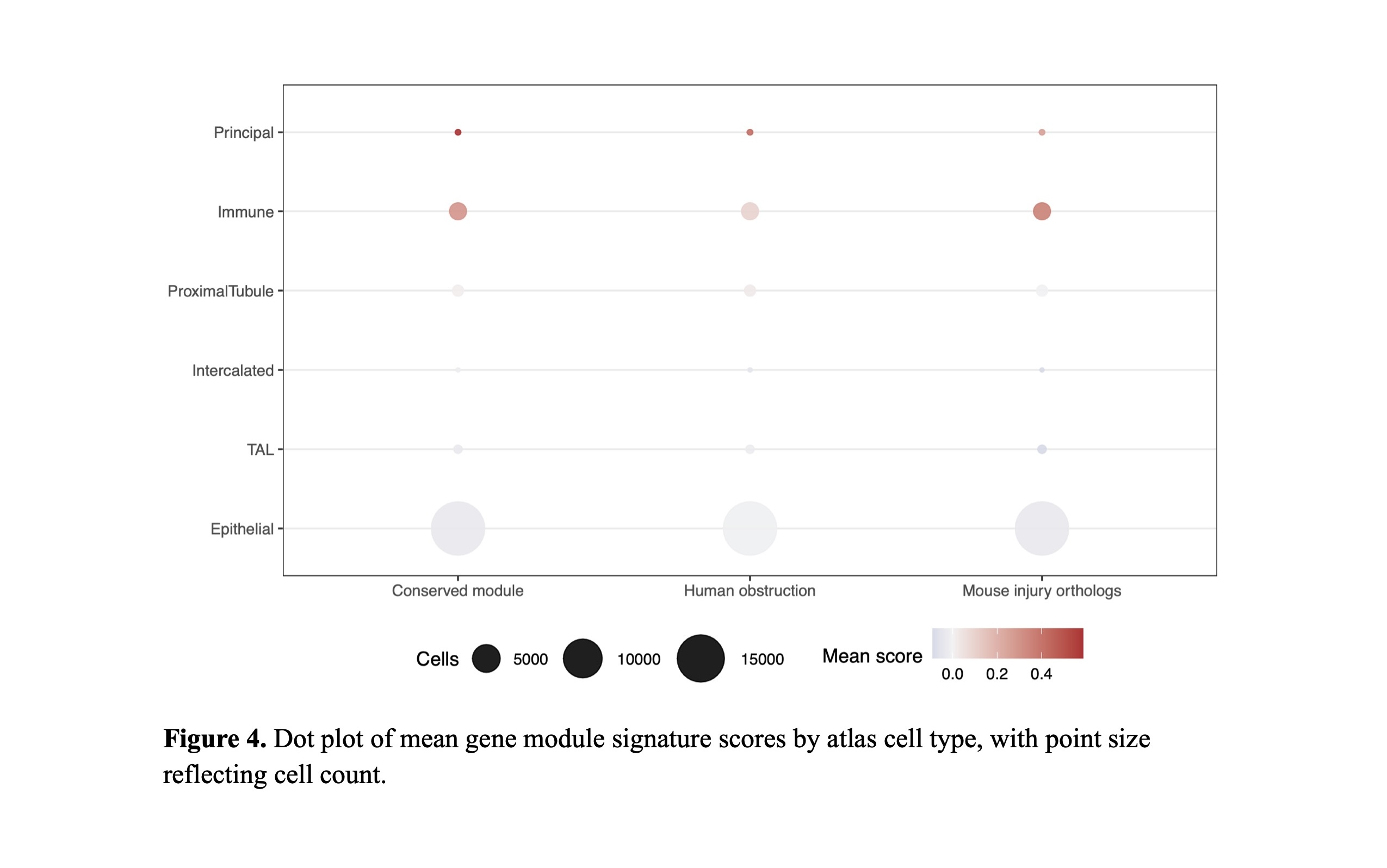
THBS2, several of which are plausible for urine or serum protein-based assays. Most genes (156/196) were reversible following relief of obstruction in mice, while a subset (40/196) remained persistently altered. Atlas scoring localized the conserved module most strongly to principal and immune compartments in normal adult kidney, supporting a broad epithelial-injury and inflammatory-remodeling interpretation (
Figure 4).
CONCLUSIONS:This ortholog-mapped reanalysis identifies a conserved obstruction-injury candidate module that may support future urine or serum biomarker development for children at risk of persistent obstruction after urinary tract reconstruction. These findings should be interpreted as biomarker prioritization rather than clinical validation; prospective pediatric urine or serum studies linked to postoperative imaging, renal function, and reintervention outcomes are needed.
Back to 2026 Display Posters


