Back to 2026 Display Posters
Cosmetic outcomes after revision exstrophy repair for bladder exstrophy patients—increased penile length
Kristina Gam, MD, Alexandra Bain, MD, Selvin Daniel Ezhilarasu, MD, Nathalia Amado, PhD, Amy Fries, FNP, Daniel DaJusta, MD, Peter Cuckow, MD.
Nationwide Children's Hospital, Columbus, OH, USA.
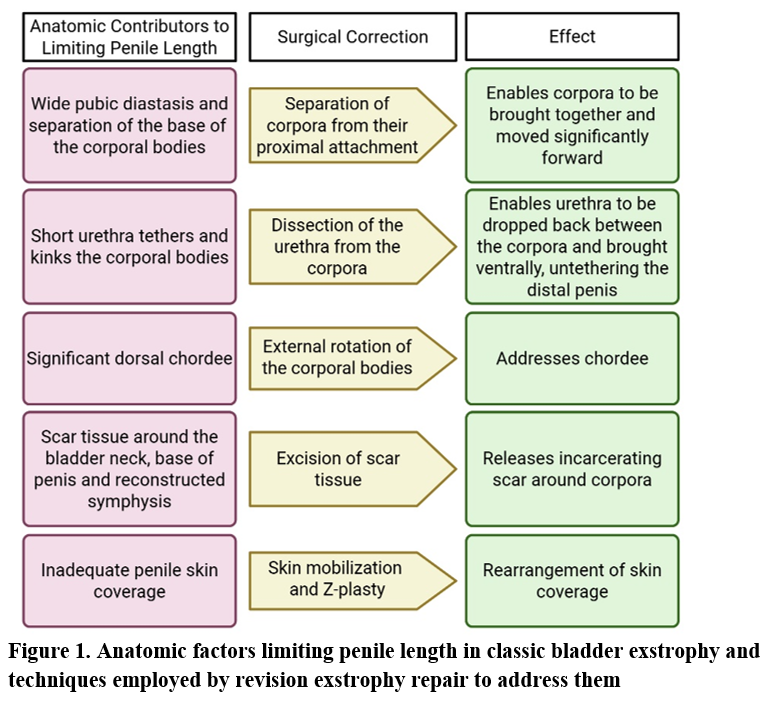
BACKGROUND: One of the main goals of revision exstrophy repair for classic bladder exstrophy is to improve the cosmetic appearance of the penis. Lack of penile length is due to multiple anatomic factors and addressed by full mobilization of the base of the corporal bodies and preservation of the pudendal neurovascular bundles, as described by Justin Kelly (Figure 1). We sought to describe our center’s outcomes of penile cosmesis following revision exstrophy repair using these techniques.
METHODS: A retrospective review was performed of male patients with classic bladder exstrophy undergoing revision exstrophy repair at a single institution from January 2025-March 2026. Penile length was measured before and after surgery. Clinical images were captured and secured within the patient’s electronic medical record. Statistical analysis was performed using the Mann-Whitney test.
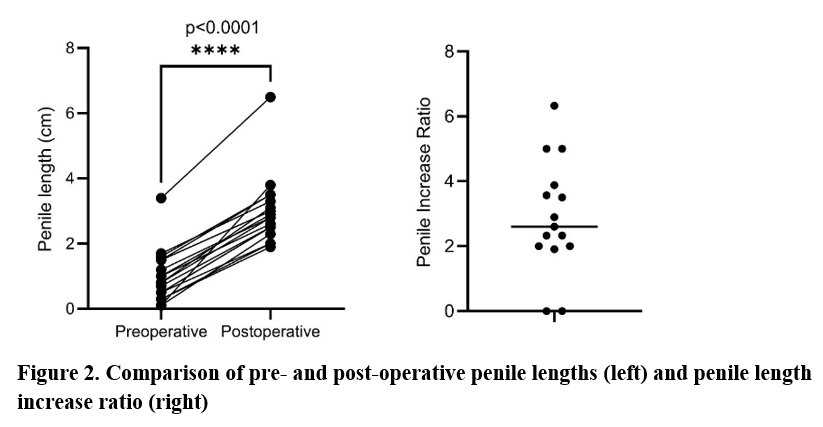
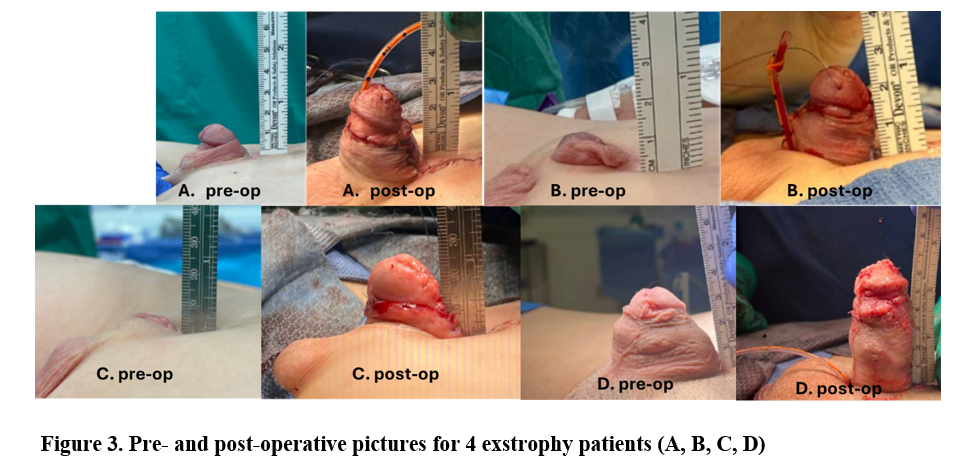
RESULTS: 20 male bladder exstrophy patients were included from a prospectively collected database. 6 patients previously underwent MSRE, 12 patients had CPRE, and 2 patients had bladder closure only. In two patients, the skin reconstructed urethra was able to be advanced to the tip of the glans, in the remainder there was some degree of hypospadias. There was a significant increase in median penile length (2.8cm vs 0.8cm, p<0.0001) with an average penile length increase of 2.89x or 1.98 cm (Figure 2). Photos were captured of pre- and post-operative penile length and appearance for 18 patients. Representative images of 4 patients are shown in Figure 3.
CONCLUSIONS:Revision exstrophy repair significantly improves penile length for male patients with bladder exstrophy on average 2.89x in the immediate post-operative period. Further follow up is required to evaluate if these benefits are sustained long-term.
Back to 2026 Display Posters


