Back to 2026 Display Posters
Epidemiology and postnatal care of contemporary pediatric patients with ureteroceles - an Epic COSMOS database study
Tevin Brown, BA, Evan Miller, MS, Daniel Park, BA, Rohit Veerapaneni, BA, Abhishek Seth, MD, Pamela Ellsworth, MD, Peter Y. Cai, MD.
Nemours Children's Hospital, Orlando, FL, USA.
Background: Ureteroceles require close postnatal care by pediatric urologists and/or surgeons to reduce the risk of complications such as urinary tract infections and to determine who needs surgical intervention. This study seeks to characterize the incidence of ureteroceles and factors predicting postnatal evaluation by pediatric urologist or surgeon.
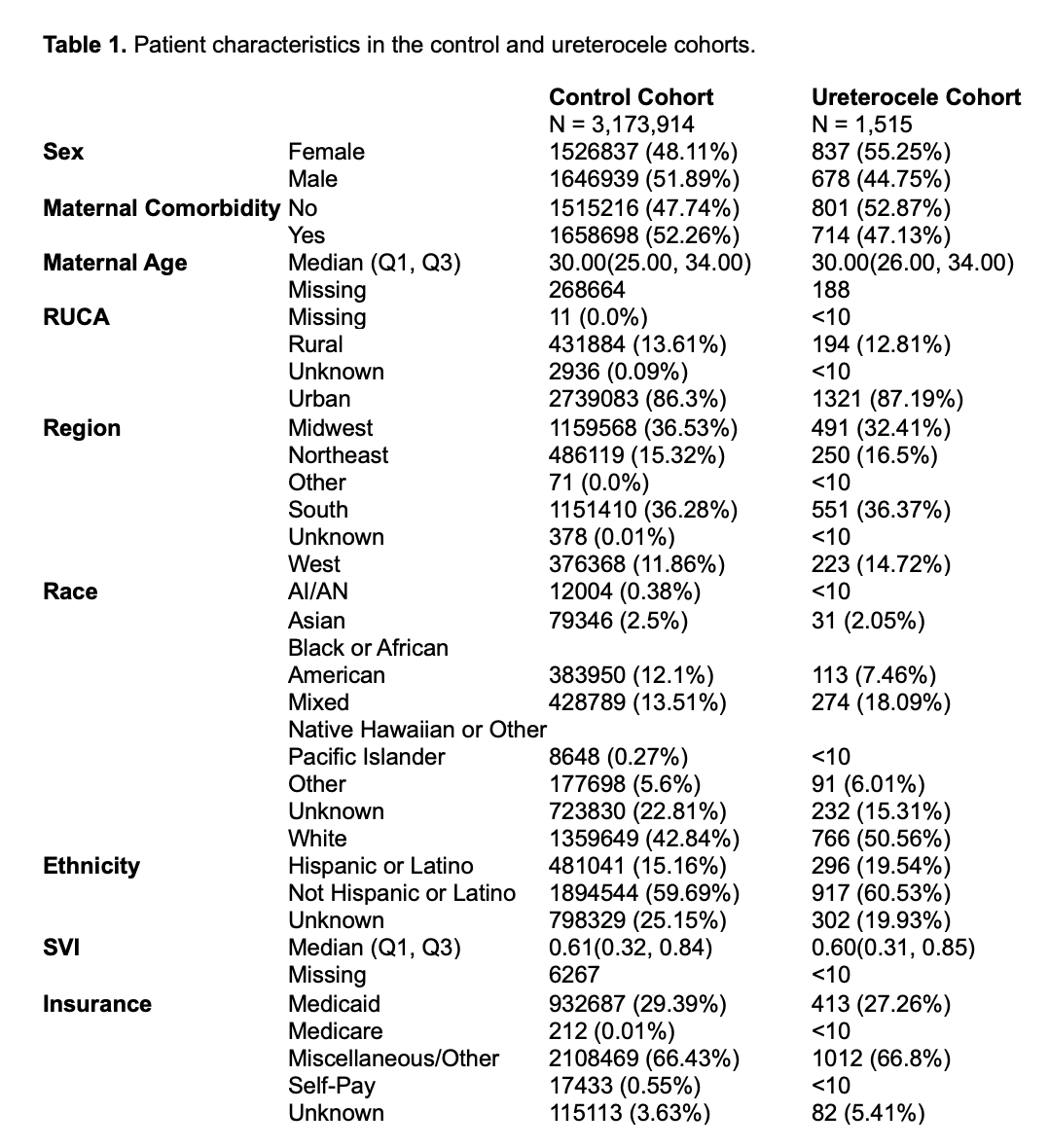
Methods: We conducted a retrospective cohort study (2015 - 2023) using Epic Systems’ Cosmos research platform (Epic Systems Corporation). Infants with a diagnosis of ureterocele were identified using International Classification of Diseases (ICD) codes. Those without ureterocele diagnosis code were used as a control cohort. Patient characteristics were extracted including sex, rural-urban commuting area (RUCA) codes, social vulnerability index (SVI), maternal age and morbidity status, insurance, race, ethnicity and time to evaluation by specialist (urologist or general surgeon). Cox proportional hazards model was used to analyze factors predicting subsequent evaluation by urologist or general surgeon within the first 2 years of life.
Results: Prevalence during the study period was approximately 0.05% (1,515 cases in 3.17 million births) or 1:2000 births (
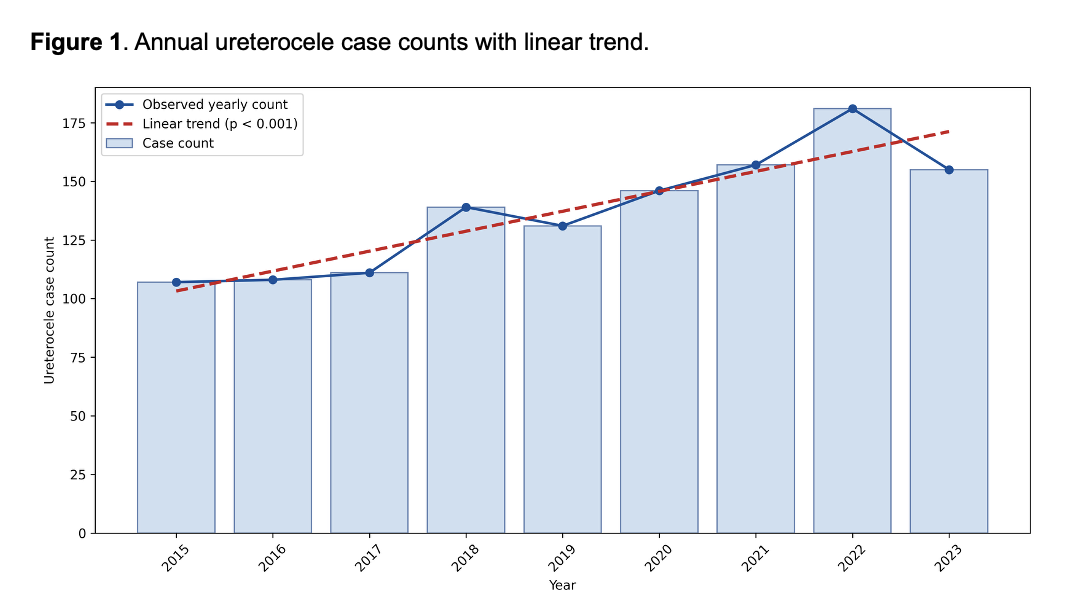
Table 1) with a significant increase in total cases over the study period,
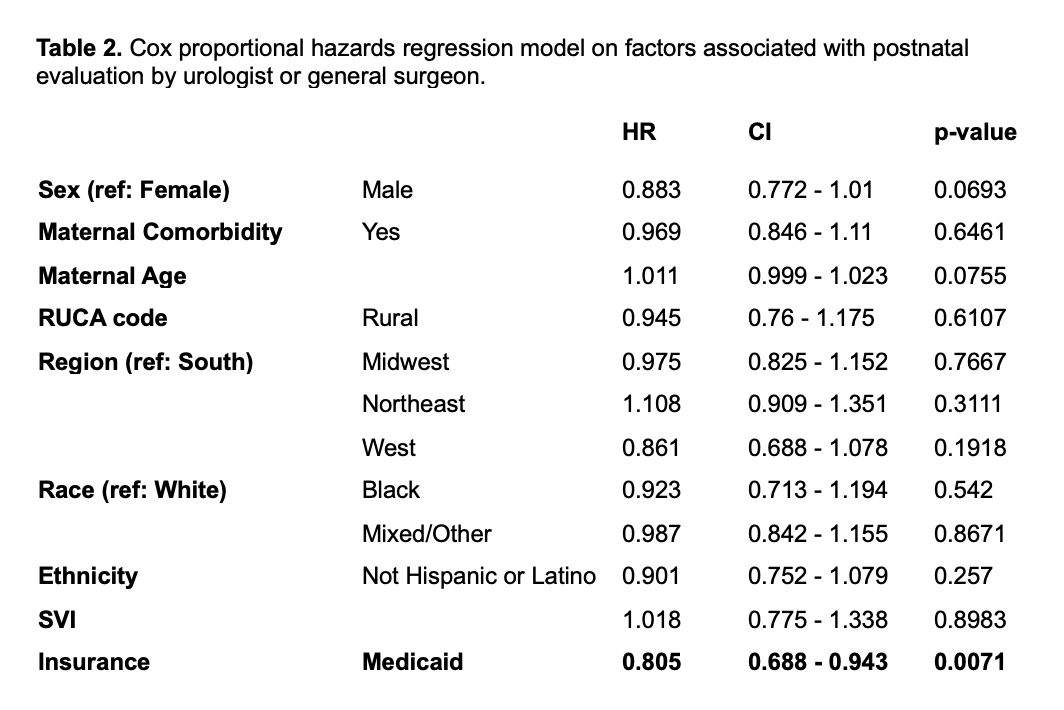
Figure 1. 88.3% of pediatric ureterocele patients were evaluated by urologist or general surgeon within the first 2 years of life with median time to evaluation of 37 days. After adjusting for sex, RUCA, SVI, maternal comorbidity status, maternal age, region of country, race, ethnicity, and insurance status, only Medicaid status was significantly associated with decreased likelihood of getting evaluated by pediatric urologist or surgeon within the first 2 years of life (HR 0.81, 95% CI 0.69 - 0.94, p=0.0071),
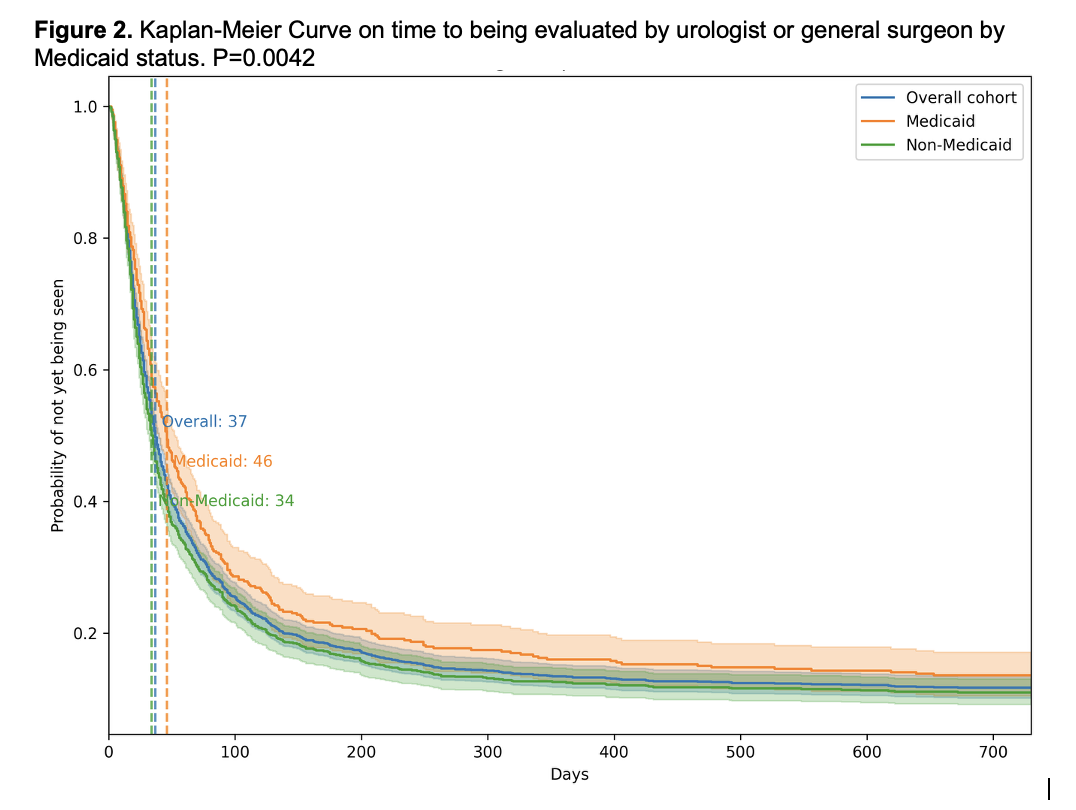
Table 2. Median time to evaluation was 34 days in the non-Medicaid cohort versus 46 days in the Medicaid cohort, p=0.0042 (
Figure 2). The Medicaid ureterocele cohort had significantly larger proportion of urology/surgery encounters in the ED (4.1% versus 1.7%, p=0.0102) but no difference in diagnosis of CKD (12.6% versus 10.1%, p=0.1998) compared to the non-Medicaid cohort.
Conclusion: Our data from a large EHR database suggests that the contemporary incidence of pediatric ureteroceles is approximately 1:2000. While the majority (88.3 %) of patients had surgical subspecialty evaluation, we found that Medicaid status was associated with delayed postnatal evaluation by urologist or surgeon and a greater proportion of these encounters occurred in the ED in the first 2 years of life. Future studies will be conducted to better understand this difference and the implications for healthcare access, utilization, and outcomes.
Back to 2026 Display Posters


